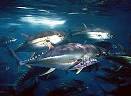
Buyer beware: EU bans fish imports over illegal fishing concerns

After months of warnings by the Commission, the European Council has finally banned seafood imports from Belize, Guinea and Cambodia over fears that the three countries have disregarded obligations to address illegal, unreported and unregulated (IUU) fishing. EU member States will now have to implement the ban and European fleets will not be able to operate in the EEZs of the three blacklisted countries.

Several tuna vessels owned by EU suppliers MW Brands (part of the Thai Union Group) and Pevasa are flagged to Belize and, unless they are de-registered and issued with a new flag by a country able to trade with the EU, they will not be able to supply tuna to the UK or any other Member State.

This could pose significant problems for importers as they will need to renegotiate and/or to find new suppliers in an effort to maintain a steady supply of sought after tuna products.

The EU’s ban has followed months of warnings not just to the three blacklisted countries, but also to Panama, Vanuatu, Fiji, Sri Lanka and Togo. Having been seen as keen to cooperate, they have been given additional time to enact and implement credible measures against illegal fishing.

Critically, the European Commission has also issued warnings to South Korea, Curacao and Ghana with regard to IUU fishing controls over distant water fishing fleets. EU interests have invested heavily in the Ghanaian tuna processing industry and a ban on imports from Ghana could be extremely difficult for the trade.
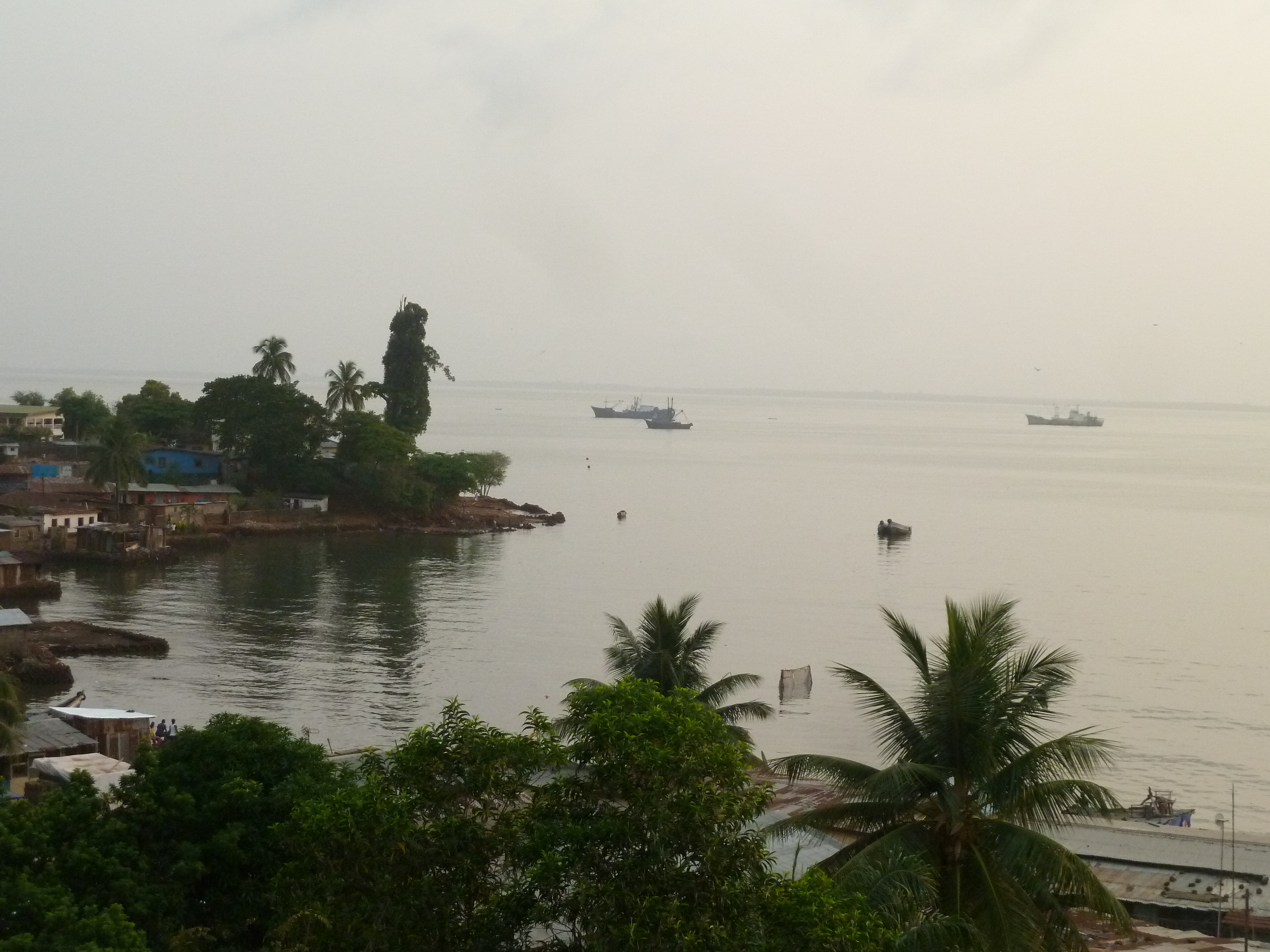
Fishing Vessels in Guinea

Fishing Vessels in Guinea

European Council Regulation 1005/2008, the legal tool that has brought about the ban, incorporates key aspects of the International Plan of Action to Prevent, Deter and Eliminate IUU Fishing and the Port States Measures Agreement (PSMA), an international convention hailed by many as a leading legal tool with great potential to address IUU fishing. Questions are being asked as to whether the United States, whose Senate has recently given the green light for the ratification of the PSMA, will be the next global market State to develop a comprehensive system of port and market filters similar to that in place in the EU (http://www.nmfs.noaa.gov/ia/iuu/portstate_factsheet.pdf)

For importers and their insurers this highlights the need to be vigilant: discernment on illegal fishing is now more important than ever, as is insisting on supply chain transparency. Choosing only fish suppliers that can demonstrate compliance with European and International laws will help deflect supply chain instability, contribute to the sector’s resilience and promote fair play.

Illegal, Unregulated and Unreported (IUU) fishing in the Mediterranean

A thoughtful post about IUU fishing in Mediterranean waters and a reminder that illegal fishing does not just happen in the EEZs of developing countries. Further, IUU fishing is not attributable to monster ships only: some artisanal and leisure fishermen do breach regulations devised to protect fish stocks from overexploitation, sometimes using destructive methods such as drift nets and monofilament. In all, IUU fishing represents a great and persistent risk to anyone whose long-term interests depend on a productive ocean.

Unknown's avatarMedReAct

The nature and extent of IUU fishing in the Mediterranean Sea is not clearly known at present. It is known, however, that these dubious activities are becoming a common practice in recent years. Mediterranean Flag states currently report several IUU fishing related issues mostly related to the Mediterranean fleet. In 2013 the General Fisheries Commission for the Mediterranean (GFCM) identified purse seine, trawl and driftnets as the gears that are mostly involved in IUU fishing. Repeated serious 
infringements related to the use of driftnets were documented in Italy,
 showing the extent of illegal activities by
 over 300 Italian driftnetters.  A  ban on
 small scale driftnets in the Mediterranean would allow closing the current regulatory loopholes that illegal fishing operators have abundantly used to elude controls.

View original post

Maritime insecurity and sustainable development: building bridges of knowledge

As a social species we human beings rely on communication to achieve our individual and common ends, but work in collaborative initiatives can often highlight the limitations of language. Having participated in a great seminar on Maritime Security and Sustainable Development coordinated by Coventry University’s Centre for Peace and Reconciliation Studies, it was interesting to hear other people’s opinion on this very subject.

One aspect of discussions that drew attention from attendees, rapporteurs and coordinators was the differing perspectives and understandings that people from different research disciplines can attach to simple words. An attendee commented on how the word ‘risk’, for example, could mean widely different things to people from diverse professional backgrounds. The importance of making an effort to see how someone may be relating to a topic under discussion cannot be overestimated: communication barriers can stop a project before it starts as potential stakeholders can misunderstand the relevance of an issue to them or their business.

At the seminar, the notion that maritime security and sustainable development are distinct academic and professional fields created difficulty when debating concept overlap. Yet, building bridges of knowledge between the areas of maritime security and sustainable development is not as counter-intuitive as it may at first appear. This became apparent when our seminar group began to explore the nature of policy and research stakeholders that would have an interest in each field: before long it became clear that the overlap was so substantial that the stakeholder lists were practically identical. Further debate exposed some causal factors that link both issues, such as the breakdown of the rule of law and failed maritime policies (not necessarily always associated to failed or fragile States). Certainly illegal fishing can be understood as a manifestation of both maritime insecurity and unsustainable resource allocation, development and commercial policies.

Along similar lines, at the 2014 Fishery Dependency Information Conference held in Rome, conclusions seem to have been revolving around the need to break down communication barriers between fishery stakeholders and scientists. Collaboration is key and mutual trust and understanding is not only desirable but vital for the achievement of reliable data and a genuine understanding of human impacts on the marine environment.

Breaking down communication barriers means bringing together disparity and promoting knowledge, inclusivity and respect. Bridging understanding gaps ultimately unites people in the pursuit of a common goal – we need those bridges of knowledge to bring the fragments together and understand the whole: devising truly sustainable ocean utilisation policies depends largely on this.

Overfishing is Mismanagement

Overfishing does more damage to the ocean than all other human activities together

Overfishing does more damage to the ocean than all other human activities together

The Economist brings two lucid articles on an obvious and yet hidden truth: the fact that the ocean is on its metaphorical knees. If the ocean was a bank account it would be careering towards the red at a blistering pace.

Many of us who have been studying fisheries policies and governance structures for a while have known for a long time that those responsible for administering the ocean have behaved like irresponsible managers, squandering it away.

In a way, we are all responsible. I heard someone say long ago that human beings are badly wired to see the whole picture and that we rush into taking the path to short-term gain without properly considering what the consequences of our actions will mean for other people’s children. This ignorant attitude has certainly characterised human domination over the oceans. Not only have we enshrined in law that ocean space beyond the exclusive reach of coastal States is a ‘free for all’ but we have refrained from exercising the required restraint to avoid the collapse of entire fisheries, rushing in for the kill in case anyone else would beat us to it.

Rampant overfishing has caused more harm to the ocean than all other human activities put together, according to the Economist articles. As a consequence of our actions, the ocean is losing its ability to sustain life. And the legal and governance frameworks that should stop this decline are woefully inadequate to be any use. And yet, better long term fisheries management would make the industry better off by an annual margin of $50 Bn, according to the World Bank.

Can the decline be helped? The are actions we could take, if we really cared. Responsible government agencies and NGOs have called for a global register of fishing vessels, a sort of registration number that does not change when the vessel is sold or renamed. Could you imagine cars without registration plates? Ships should have them too.

The other action is tracking technology. It is all very well to have marine protected areas, but there is no way of ensuring their integrity unless it is known where fishing vessels are. The technology already exists and there are few reasons not to use it. Heard of AIS? Cheap, available to everyone and widely used. It is time to stop the excuses and start using technology to track the whereabouts of fishing vessels.

Governments should demonstrate that they are capable of tracking the whereabouts of their fishing fleets. If they are not, their ability to licence ships for fishing should be removed by an international court. Vessel masters that want to fish in international or foreign waters will then have to register with a country that is responsible enough to track their vessels proactively and stop them from getting into places where they have no right to fish.

Many have decried insurmountable obstacles to achieve rational management of the fishing industry but, with today’s technological tools, the real reason lies in a lack of global vision and in myopic greed.

Putting it bluntly, overfishing is mismanagement and everyone knows what happens to badly managed stuff – after a while, it goes bust. When it comes to the ocean, that is something we simply cannot afford.

http://www.economist.com/news/international/21596990-humans-are-damaging-high-seas-now-oceans-are-doing-harm-back-deep-water

http://www.economist.com/news/leaders/21596942-new-management-needed-planets-most-important-common-resource-tragedy-high

Shark carcasses at a wholesale market

Rampant overfishing is leading to ocean degradation.

Illegal fishing in the age of global GPS: governments talk whilst making little use of available technology

Conversations on the subject of illegal fishing tend to gravitate around regions of the world that are known poaching black spots (be it the historically fertile and vulnerable waters of West Africa, the tuna-rich waters of the Indian ocean or the South-Western Atlantic and its lucrative banks of tooth-fish).

Despite the deserved attention that those marine spaces are paid, it is worth remembering that the curse of illegal fishing also takes place much closer to home. Though European waters are (theoretically at least) amongst the better controlled marine regions in the world, it seems that a shocking amount of illegal activity takes place here too, right under our noses.

This week, a newspaper in Malta has highlighted that illegal fishing activity by large fishing trawlers has been more or less commonplace in the protected marine reserve that surrounds the island in recent years (see link below).

Apparently, Maltan authorities have been able to identify poaching activity by various means, but it looks like some key discoveries were down to the deployment of a simple and affordable surveillance tool: AIS. Whilst I am sure that they must have invested in other systems of detection, I can’t help wondering why they didn’t start using AIS before, since it is affordable and easy to use. Vessel crews can switch off their ship’s AIS, but it looks like they didn’t even bother doing this during their illegal incursions into the marine reserve.

Given that fisheries resources around the world are on their metaphorical knees, coastal nations should be watching their seas like hawks. And why are the flag States of the vessels doing the poaching not calling them to task as soon as they cross the line into a protected marine area or the border of an EEZ where they don’t have permission to fish? In the age of global GPS, satellite surveillance and smart-phones, it is increasingly difficult to believe that lack of technological resources is the real problem.

http://www.maltatoday.com.mt/en/newsdetails/news/national/New-control-centre-discovers-widespread-illegal-trawling-20140212

Sea Shepherd to Assist in Guatemalan Anti-Poaching Operations

In an unexpected turn of events, the Guatemalan Department of Fisheries has asked Sea Shepherd to assist in surveillance and patrol operations in its maritime waters, according to an article by Maritime Executive ( http://www.maritime-executive.com/article/Sea-Shepherd-Helps-Guatemala-with-Poaching-Problem-2014-02-11/). Concerned by high levels of poaching for Marlin during the winter and early spring months, the Guatemalan government will be relying on support from the SS vessel Brigitte Bardot.

It has also been reported that the Sea Shepherd, who have incorporated throughout various Latin American jurisdictions, will be rolling out an educational programme and a series of presentations on marine conservation in Guatemalan schools.

Should States be internationally accountable for illegal and excessive fishing?

The global marine fisheries industry relies on harvesting limited living resource and requires careful regulation in order to prevent over-exploitation of fish stocks, but some characteristics of the sector make regulation extremely challenging. Factors such as the dual role of the State as ocean steward and economic actor and the policy of competitive open access to high seas resources adopted by the international community have resulted in important governance weaknesses.

One of the most pernicious consequences of inadequate governance is the pervasive presence of Illegal, Unreported and Unregulated (IUU) fishing. IUU fishing is a major contributor to overfishing and a significant obstacle to sustainability. Its effects extend beyond causing damage to fish stocks and the marine environment: IUU fishing has also been linked to organised crime and food insecurity. It has also been recognised as intrinsically damaging to the industry itself and to the global economy at large.

The international community, aware of the need for conservation and concerned that IUU fishing may have become a chronic industry malaise, has made a sustained legislative effort to clarify how shared marine resources should be managed and protected. As part of this trend, the conservation responsibilities of nations whose fishing vessels harvest the oceans beyond the boundaries of their Exclusive Economic Zones have been reinforced and clarified. But in spite of legislative developments IUU fishing and irresponsible overexploitation continue to be rampant.

It has been argued that the sustainable expansion of international law can only be supported by a corresponding development of structures and processes of legal accountability (Jutta Brunee, 2006). In light of this assertion, legislation to define the responsibilities of fishing nations should have been developed alongside associated accountability mechanisms. Has this been observed by international legislators in the context of global fisheries?

There is an emerging debate on the extent to which flag States should be held responsible for the IUU fishing activities of vessels flying their flags and the extent of their liability (Palma, Tsameny and Edeson, 2010). Despite the nebulous nature of State accountability in International Law, it is becoming increasingly important that debate on this subject gathers pace. 

Aggressive ocean grabs: the Sea is not the only loser

The outrage of land grabs pales by comparison to the exploitation of vulnerable and increasingly rare ocean resources by some fishing nations.

As China’s giant fishing fleets plough the ocean unabated, small fishing nations are suffering devastating losses in their own marine capture and processing sectors. Their fishing vessels, not being able to compete with constant and extensive exploitation by Chinese fleets in neighbouring waters, are coming back to their home ports empty-netted.

Fiji has recently reported the closure of important segments of its tuna industry, with expected job losses of about 8,000 and growing concerns over its food security.

Maritime nations, entrusted by international law to be the stewards of the ocean, are in fact the main contributors to its devastation, as they are subsidising their ludicrously oversized and no longer profitable fishing fleets to continue their plunder. The Japanese government spends USD 4.6 Billion in subsidies to unprofitable fishing fleets, whilst China follows closely with subsidies of USD 4.1 Billion. Other States that dangerously subsidise their industrial fishing fleets are the EU (USD 2.7 Billion), the US (USD 1.8 Billion) and the Russian Federation (USD 1.5 Billion).

The impact on the oceans of the relentless overexploitation by the biggest fishing nations is profound. In the Pacific Ocean, valuable commercial species such as Albacore and Bluefin tuna are shrinking at unprecedented rates.

Sources: Pew Environment Group; Undercurrent News.

Some tuna are shrinking rapidly in the Pacific Ocean

Some tuna populations are shrinking rapidly in the Pacific Ocean

Big Fishing Nations that won’t Stop Overfishing – Part II

Well, the writing was on the wall. Large fishing nations have long asserted their physical and financial superiority in our shared oceans.  Muscling their way into international negotiations, they have steadfastly refused to lower their quotas, kept their oversized fishing fleets artificially afloat with subsidies and refused to rein in furtive night time poaching by their trawlers, seiners and long liners into waters where they were not welcome.

Time after time we have seen the big bullies assert their dominance over the sea’s living creatures as if they had exclusive right to them.

And now, the consequences are beginning to emerge. There are reports today that the small island nation of Fiji, known for its marine beauty and abundance albacore, may have lost its tuna fishing industry at the hands, nets and hooks of the Chinese (http://fijilive.com/news/2014/01/tuna-fishing-industry-has-collapsed-southwick/56333.Fijilive)

As China keeps its growing fishing fleet awash with State sponsored subsidies, tax waivers and ship construction aid, Fiji’s fishing boats remain today tethered in their harbour, with nothing to catch. China’s predatory fleets are not only decimating a key ocean species, but they are also causing food insecurity in a small, vulnerable coastal nation ( http://www.atuna.com/index.php/2-uncategorised/485-albacore-crisis-can-cause-food-dilemma-in-fiji#.Ut5ZkJE4k18 ).

China is asserting its dominance in the Pacific, as Fiji shuts down one of its key economic sector and faces a dilemma that is likely to have deep repercussions for its economy and its people. Overfishing is the new disease of the small island nations and, as artificially large fleets supported by irresponsible nations continue to plunder the oceans, the cure may not be easy to find.

Unknown

Why the fate of small fishing nations is linked to sustainability in fisheries

Industrial fishing is mostly a global industry. Everyone knows that large fishing vessels can circumvent the Earth and harvest all its oceans. Even smaller semi-industrial vessels can reach international waters.

Whilst most commercial fish species live in the exclusive economic zones of coastal States, much of the fish we like to eat (tuna and tuna-like species, swordfish, herring, etc) like to migrate. This means that, inconveniently for regulators and policy-makers, fish can often weave in and out of national boundaries. Logically, the industrial activities of those pursuing these species cannot be regulated by one country alone.

Further, the way that fisheries regulation works means that, as soon as a fishing vessel leaves its country’s exclusive economic zone, it will be regulated not only by the laws of its own country (its ‘flag State’), but also by the laws of the coastal States where it may be aiming to fish and, depending on what species it targets or where in the ocean it operates, the conservation and management measures of RFMOs (regional fisheries management organisation).

This generally means that when an act of illegal fishing is carried out, the success of an investigation and any subsequent penalty or (where criminal laws have been breached) prosecution, will depend on the willing and active involvement of a number of countries and/or RFMOs. Though international law obligates countries to cooperate in these matters, the truth is that they frequently don’t (with some honourable exceptions).

Everyone involved with international environmental protection laws knows that things are far from simple. No overarching international fisheries body exists that can enforce compliance on fishing nations and so, international requirements tend to be obeyed only when they are beneficial for the fishing nations in question.

What this tends to mean is that big, powerful fishing nations tend to end up making executive decisions that benefit their fleets, whilst ignoring the requests of smaller fishing nations. The trouble with this is that the global fishing fleet is already too big, so if powerful States are getting most of the legal quota (and may I point out that legal does not necessarily equal sustainable), this can leave few agreeable options for small fishing nations.

This situation was exemplified at the meetings held over the past few weeks at the West and Central Pacific Fisheries Commission (link: http://www.worldfishing.net/news101/industry-news/commission-disappointed-by-wcpfc-meeting ) where a new depth was reached in the lack of political commitment by some of the most powerful fishing nations to rein in overfishing of tuna.

And whilst legal overfishing carries on, the hidden tragedy of illegal fishing continues undeterred.

The good news is that some markets have begun to equip themselves with methodologies that have the potential to weed out illegal fishing products, and to identify fishing nations that foster or do not make an effort to curb illegal fishing practices.

The bad news is that in order to participate in those markets as ‘good guys’, States have to have certain fleet control tools and methods in place. Many small fishing nations do not have access to this. Some lack the support, whilst others are marred by fragile institutions that interfere with fisheries control processes, disengaging them from the rule of law.

Unfortunately this means that some small nations may not be able to demonstrate sufficient fisheries control to markets that require guarantees of legality, and may eventually get squeezed out. This, coupled with the irresponsible (though sadly legal) overfishing of some larger fishing nations can spell impending disaster for vulnerable States.

A new initiative, the Fair Fisheries And Markets Access (FFAMA) is developing to try to find a solution to this problem. You read it here first!

A perspective of the fishing vessel harbour in Freetown, Sierra Leone

A perspective of the fishing vessel harbour in Freetown, Sierra Leone