In 2023, the Mercatus Center (George Mason University, in Virginia) and the Center for Governance and Markets (University of Pittsburgh, Pennsylvania) hosted a joint roundtable event dedicated to addressing persistent problems in global overfishing. The inspiration behind the event had been the launch of the Fisheries Subsidies Agreement of the World Trade Organization (WTO), which provided the unifying thread for a series of discussions by several experts across different fields. The roundtable took place in Pittsburgh in the Summer, and preceded a number of written contributions that were subsequently published as part of a compendium of Policy Briefs hosted by the Mercatus Centre, all of which are accessible here.
The purpose of the compendium is to explore solutions for enduring global problems involving overfishing and illegal fishing, and to inform the debate on fisheries subsidies, as well as related issues, as they are periodically debated under the auspices of the WTO and other economic and policy fora. Christine McDaniel and Ilia Murtazashvili, respectively of the Mercatus Centre and the University of Pittsburgh, have recently published a very useful paper with a summary of the topics that have been covered by all Policy Briefs in the compendium, which can be accessed here. As can be seen from the references to the topics covered by the different authors, concerns are varied and include implementation issues (particularly in the context of indigenous and small-scale fisheries) as well as agreement weaknesses and loopholes, and insight into the governance of fisheries resources as a shared concern of the global community.
A summary of all the contributions as well as links to each individual paper is kindly provided by the authors for ease of reference. My own contribution to the compendium, named ‘Can the WTO Help Fight IUU Fishing through Clarity-Enhancing Market Measures?’ can be accessed here. I hope you find this and other contributions interesting and useful.
In 2022 the European Union (EU) and New Zealand (NZ) concluded a free trade agreement, signed on 9 July 2023, which has been heralded as a landmark setting instrument for the protection of environmental concerns. The purpose of this blog post is to offer insight into the features of the agreement in matters of marine fisheries and into whether and how it will preserve the EU Single Market form the erosion of existing commercial fishing regulation and control standards.
Image credit: Euractiv.com
The Commission had announced prior to signature that the trade deal with New Zealand would not change European standards, and that the agreement would support international environmental commitments already made, while preserving each party’s right to conduct the regulation production and trade processes within their respective jurisdictions. Both the EU and NZ highlighted that the effective implementation of applicable international environmental agreements would be considered a matter of priority. The Commission indicated that attention would be paid to areas where trade and environmental agendas can support each other, including marine fisheries, and that care would be taken to promote trade in legally harvested and sustainable products.[1] Such manifestations imply the importance that the parties have attached to compliance with and implementation of international fisheries-relevant agreements, such as the Convention on International Trade in Endangered Species (CITES), the Agreement for the Implementation of the Provisions of the United Nations Convention on the Law of the Sea of 10 December 1982 relating to the Conservation and Management of Straddling Fish Stocks and Highly Migratory Fish Stocks (Fish Stocks Agreement or UNFSA), and other relevant treaties.
In the next few paragraphs, I review the fisheries-specific provisions of the EU-NZ trade agreement with a view to unwrapping the ways in which the agreement strengthens fishery governance and, if so, what tools and mechanisms it puts in place.
That the agreement contains explicit references to fisheries conservation and management and IUU fishing control should not come as a surprise: Firstly, the EU has the ambition to consolidate its presence in the Indo-Pacific, where it sees New Zealand as an important partner.[2] EU strategy in the region has prioritised prosperity alongside ocean governance and security, including maritime security, amongst other areas.[3] By implication, these priorities involve consolidating the presence and influence of EU in cooperation fora in the region, including fisheries governance institutions, and cooperating with trade partners to cement common approaches.[4] Secondly, sustainable trade and stopping the decline of biodiversity loss are also stated priorities of the EU in the region,[5] and it is clear that the Commission sees trade partnership agreements as an important part in the attainment of such strategy objectives.[6]
The agreement considers fishery products to be ‘wholly obtained’ in one party within the meaning of Art. 3.4(1) if they have been captured inside the territorial sea of that party (subparagraph f), or captured as part of marine fishing operations outside of the territorial sea in accordance with international law by a vessel flagged to a party (subparagraph h), or produced on board of a factory ship flagged to a party provided that the product results from the captures just specified (subparagraph i). Further, as is logical, habitual fishery management mechanisms such as the restriction of captures via the use of quotas, licences, or other tools, are excluded from the prohibition to restrict market access due to the establishment of quantitative limitations on enterprises, transactions, assets, or operations, established in Article 10.5(a) of the agreement.
An important provision is contained in Article 16.4, prohibiting harmful fisheries subsidies, and establishing cooperation mechanisms of a legal and non-legal nature, which include the implementation of the WTO Agreement on Fisheries Subsidies of June 2022. The effect of this is, inter alia, the prohibition of subsidies that contribute to enabling IUU fishing operations, as well as subsidies that sustain overcapacity and overfishing. This complemented by a broad accountability-contributing mechanism contained in Article 16.5, whereby the parties agree to disclose the form, quantum, recipients, and legal bases of subsidies within one year of the entry into force of the agreement and biannually thereafter.
The broadest section of the agreement with regard to fisheries governance is comprised in the series of provisions contained in Article 19.10, concerning trade and sustainable management of fisheries and aquaculture. The article commences with the acknowledgement of the role of trade in the management of fisheries and the broader context of marine resources and ecosystems, and the dependency of the sustainability of trade in fishery products from fishery management, removal of harmful subsidies, and IUU fishing control, highlighting the need for action to attain those ends (respectively subparagraphs 1 and 2). This provides context for a series of further declarations and commitments in subsequent subparagraphs.
Article 19.10(3) in subparagraph (a) sets out conservation and management obligations for the parties to “implement long-term conservation and management measures to ensure sustainable use of marine living resources based on the best scientific evidence available, the application of the precautionary approach and internationally recognised best practices” consistent with the LOSC and with applicable international fisheries law. The purpose of this obligation is stated to be to prevent overfishing and overcapacity, minimise by-catch of on-target species and juveniles, and promote the recovery of overfished stocks (respectively subparagraphs (i), (ii), and (iii)). Subparagraph (b) then establishes obligations in regard to international cooperation, and directs the parties to “participate constructively in the work of the regional fisheries management organisations” of which they are members, observers, or cooperating non-members, with the aim of achieving sustainability and good governance. Lastly, subparagraph (c) requires the parties to “implement an ecosystem-based approach to fisheries management” to minimise the broader impacts of fishing activities, particularly with regard to species recognised as threatened.
Paragraphs (4) and (5) of Article 19.10 address IUU fishing, commencing with an acknowledgement of international cooperation and coordination framed by international instruments, and following with an obligation to support monitoring, control, surveillance, and compliance and enforcement systems and measures serving to deter nationals and registered vessels from engaging or supporting IUU fishing and to responds when this occurs, and to encourage traceability tools, cooperation, and information exchange. Finally, paragraph (7) brings the article to an end by establishing a cooperation duty in trade related matters, whether bilaterally, regionally, or globally, and in all relevant fora, with a view to promoting sustainable fishing and trade practices.
These fisheries-specific provisions are then couched in general rules that are important for the seafood production and trading systems of both parties. For example, in Art. 19.12 the agreement refers to rules of responsible business and trade conduct and related corporate responsibility practices in the context of various relevant international voluntary frameworks that greatly reinforce environmental and social responsibility in the architecture and functioning of custody chains. Further, cooperation commitments are reiterated in various contexts, such as the conduct of trade in paragraph 12, the exchange of scientific and technical information in paragraph 13.
To summarise, the fisheries provisions of the agreement are wholly consistent with the strategic priorities of the EU in the Indo-Pacific region. As such, the agreement reiterates existing commitments made by the EU under international fisheries agreements such as the UNFSA, the 1993 FAO Compliance Agreement, and the 2009 Port State Measures agreement to strengthen the regulation of and oversight over fishing activities, and to exercise cooperation to enhance those ends and attain improved conservation and management of marine fisheries.
Most of the indicated agreement measures do not therefore innovate over existing legislation, or the regulatory status quo in the EU. Firstly, the agreement contextualises the fisheries activities of the parties in its logical UNCLOS framework. While it is rare (though not unknown) for declarations that specific fishery products have been obtained or produced in breach of international law, this first point of contact of the agreement with the need for fishery products to be obtained or produced in a manner that is consistent with international obligations is a welcome statement that reinforces the visibility and importance of international law. The agreement in Article 3.23 enables customs authorities to carry out verification checks to assess the origin the products in question, but stringent regulations dealing with the legality of seafood products from third countries into the internal market of the EU are already in existence,[7] and the agreement does not really innovate in that respect.
Another reiteration of the state of regulatory affairs is framed in Article 19.10, which restates important duties involving cooperation and conservation and management of marine fisheries resources under existing and well-established international treaty frameworks. Yet, these are nevertheless reinforced by the provisions in Art. 19.12 in which the parties agree to promote responsible corporate practices, which are without doubt an important part of the key undercarriage to the successful implementation of said duties. Also worth highlighting is the provision in Article 16.4, which constitutes the visible implementation of recently made commitments under the WTO Agreement of Fisheries Subsidies by the EU in respect of IUU fishing, a welcome and visible sign of EU policy in this respect, vigorously underscored with transparency commitments that reinforce accountability for both parties.
Hence, overall the agreement consolidates existing commitments but also establishes the direction of travel in respect of some new policies. It further reinforces the role of trade as the strategic pièce de résistance for the EU in matters of fisheries control and conservation and management, now also made explicit in the context of its Indo-Pacific strategies.
Pew has published a Flag State Performance Assessment tool this month. The main aim of this new instrument is to help flag States self-assess their domestic legal frameworks so that they can identify strengths and weaknesses in their law and policy frameworks to regulate the activities of fishing vessels in the high seas and in the exclusive economic zones of other States. The tool enables users to identify and map certain rules and processes that, together, enable and help support and shape the powers and actions of flag state authorities, especially those that need a clear and comprehensive legal basis, such as those related to the oversight of fishing activity.
The tool comes in the form of a questionnaire, which is divided into six modules, which contain a range of performance indicators in respect of different fishing vessel governance categories. The modules are: Registration and Due Diligence, Authorisation and Licensing, Catch and Operation Reporting, Monitoring Control and Surveillance, Infractions and Sanctions, and International Cooperation). It can be used with or without a simple weighting method to enable comparison and measure progress through periodical assessments. The questionnaire can be accessed and downloaded through Pew’s website: https://www.pewtrusts.org/en/research-and-analysis/issue-briefs/2023/04/new-flag-state-performance-assessment-tool-aims-to-help-countries-combat-illegal-fishing
Beyond its main function of enabling the identification of specific IUU fishing control performance indicators, the questionnaire also has the potential to support flag States in strengthening their efforts to combat IUU fishing in a number of ways. Firstly, as the questionnaire has been developed on the basis of global international treaties and voluntary instruments, it can support the implementation of existing international rules and guidelines. It also enables mapping of the existing domestic rule framework and of changes occurring over time, and supports periodical re-assessments in a way that is objective and methodical, and can help promote legal accessibility and certainty. Some parts of the questionnaire are also designed to strengthen transparency in the domestic IUU control system and to help build cooperation procedures and practices, both domestically and internationally.
The questionnaire is not, and should not be seen as, a silver bullet to remedy weaknesses and failures to control IUU fishing, and in particular it will not be able to replace the political will and financial and technological investment that many states need to become truly effective distant water vessel governance actors. Nevertheless, it should assist in ensuring that key legal building blocks for such endeavour are in place. It is often an overlooked fact that national authorities depend on adequate legal bases to be able to exercise powers, particularly when it comes to surveillance and sanctioning, without which IUU fishing control can simply not take place.
At the same time, national legal frameworks for IUU fishing control also need specific rules that bind individuals and companies to certain obligations, as well as certain protections. With this in mind, the questionnaire contains several indicator categories that are present in each module. One of the categories relates to the powers and obligations of state authorities, and another one to the obligations and rights of individuals and companies. The third one refers to procedural indicators with a function of enhancing transparency through information and rule accessibility and enhanced legal certainty.
Although ideally the questionnaire should be used internally by the authorities of flag States wishing to improve their IUU fishing control performance, it can also be downloaded and used by independent third parties- interested in engaging in the assessment. Nevertheless, the breadth of rules and processes that the questionnaire covers makes it likely that some form of flag State assistance might be required in fully scoping existing national laws and regulations.
This instrument has benefitted from input by many experts from academia, industry, and government throughout its long development. I have had the privilege of assisting with its elaboration and having seen its evolution, maturation, and testing, I very much hope that it will serve to strengthen flag State regulation, and enhance key information and procedural transparency in the areas where it is most needed.
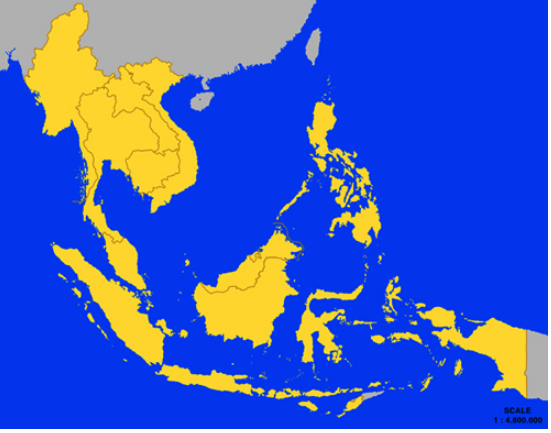
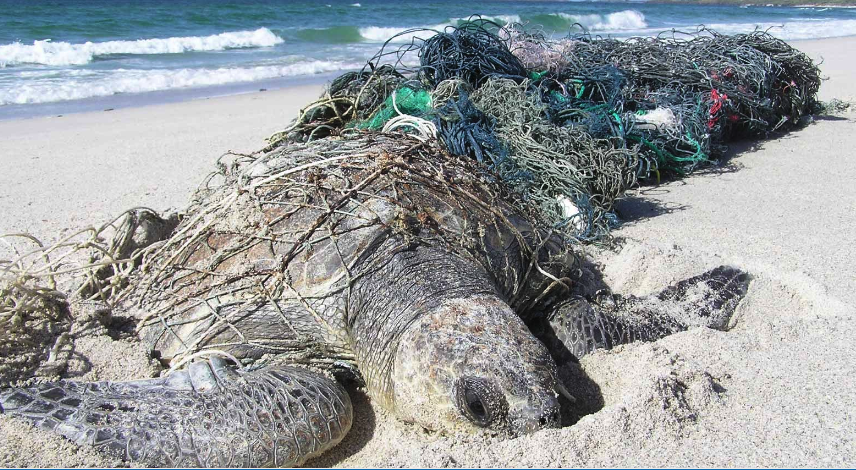
Abandoned, lost or discarded fishing gear (generally referred to as ‘ghost gear’) is a known stressor of marine species, a cause of ecosystem degradation, and a factor with significant economic cost to the fishing industry.[1] Ghost gear has been the focus of recent debate, attracting a considerable amount of attention in global policy fora.[2] In the ASEAN region, the removal of plastic litter has been made a priority by a number of States, with one of the most recent developments being the publication of Vietnam’s National Action Plan for Management of Marine Plastic Litter by 2030.
ASEAN region (Credit: Asean.org)
Vietnam has also stepped up efforts at regional cooperation for IUU fishing control.[3] Perhaps the country has been spurred by the yellow card raised by EU in 2017 over poor IUU fishing control practices,[4] or its more recent extension.[5] Vietnam might also have been stirred by a low ranking by the Global Initiative Against Transnational Organized Crime’s IUU Fishing Index.[6]
This move comes in the context of Vietnam’s double position of visibility in 2020, both as ASEAN chair, and as Standing Commissioner of the United Nations Security Council: one that no doubt will put pressure on the country to rise beyond the shadow cast by the EU’s yellow card on IUU fishing,[7] and another that should place it in an optimum position to promote cooperation policies that are congenial to its ambitious marine management objectives.
It is known that ghost gear and IUU fishing are two particularly challenging problems, even for countries that are committed to effecting sound ocean management. The links between ghost gear and IUU fishing are generally under-researched, but they have been a topic of increasing exploration in recent years. The Global Ghost Gear Initiative has suggested that a causal relationship is likely to exist: vessels fishing illegal may discard more gear in order to evade inspection or capture, or to hide illegal practices, and can lead to higher ghost gear impacts.[8]
In addition, a recent study by Richardson et al. involving ghost gear in Australia and Indonesian vessels operating in the region suggests that the loss of fishing gear may also be associated to related factors, including shortfalls in the governance of fishing grounds.[9] Amongst possible links, the author mentions poorly planned authorisation policies leading to undesirable interactions in overcrowded grounds resulting in gear conflict.
Additional research is needed to confidently establish the causes of ghost gear loss and abandonment in more detail in different regions and fisheries, and to fully unwrap the relationship between IUU fishing and ghost gear. Nevertheless, it seems likely that improving controls over illicit and/or undesirable operating practices and conditions that result in gear attrition should pay off as an approach to more efficient management.
The Global Ghost Gear Initiative has published resource and guidance documents for the removal of ghost gear (https://www.ghostgear.org/resources)
Research suggests that initiatives should include a focus on preventative practices, such as gear maintenance, repair and management workshops and policies, as well as investment in safe disposal infrastructure and where possible financial support. Yet, this should be approached without losing sight to the need for sound authorisation and appropriate management to avoid overfishing and undesirable overlaps in busy fishing grounds to avoid gear conflict where possible.[10]
The removal of plastic litter from commercial fishing, including the collection of 100% of ghost gear, is an ambitious positive commitment under Vietnam’s Action Plan. Yet, like any other country involved in oceanic resource management, Vietnam would also do well to reinforce preventative fishery authorisation and grounds management efforts, as well as appropriate monitoring and enforcement as part of IUU fishing control strategies.
Lastly, the ability of derelict fishing gear to cross borders as a result of marine currents implies that management strategies should involve regional cooperation where possible.[11] Given recent commitments made by ASEAN and their chair State this year,[12] 2020 looks set to be auspicious for ocean policy, but -as always- any benefits will be dependent on real political will and the determination to ensure commitments come to fruition through adequate and sustained implementation.
Mercedes Rosello, March 2020
References
[1] APEC, Derelict Fishing Gear and Related Marine Debris: An Education Outreach Seminar Among APEC Partners (2004) [http://www.wpcouncil.org/documents/APECSeminar/Other%20Documents/Seminar%20Report.pdf].
The concept of illegal, unreported and unregulated (IUU) fishing is usually associated with arrangements for the conservation and management of marine living resources. Yet, in recent years, this expression has become increasingly familiar in maritime security circles, often used to refer to a broad spectrum of criminal activities at sea. IUU fishing is characterised by operational opacity, which can provide opportunity and cover for complex transnational crimes, such as the trafficking of drugs and weapons, people smuggling, and grievous abuses of labour and human rights (UNODC, 2011), as well as ancillary crimes such as fraud and tax evasion (OEDC, 2016). Widespread techniques to hide unlawful or destructive operational patterns may include engaging in ‘transhipment’, namely the practice of transferring catch and other products from one vessel to another (FAO, 1996). This operation, which is often performed unsupervised at sea, can facilitate the fraudulent concealment and redirection of fishery products as well as illicit objects, or smuggling of people (UNODC, 2011).
Credit: NOAA Fisheries
Weak regulatory frameworks can enable illegal and undesirable fishing activity, as well as at sea criminality, particularly when they lack surveillance and enforcement capability (see Doumboya et al, 2017). Further, surveillance and enforcement irregularities can be associated to instances of corruption (Sundström, 2012). Whilst the existence and implementation of an adequate regime with appropriate disclosures and infraction responses lies with flag, port, and coastal State authorities depending on context, it is becoming increasingly apparent that private actors may have a significant role in shaping security risks. The insurance industry has recently been identified as one of such actors by scholars, and they may have an important role to play in the development of appropriate risk management mechanisms concerning the prevention and ultimate eradication of IUU fishing and associated crimes. As Miller et al have indicated, the provision of certain insurance services to fishing vessels identified as having been involved in IUU fishing operations appears to be far from uncommon. The authors have suggested that IUU vessel owners and operators choose to purchase insurance, even in contexts when it is not obligatory, as an operational cost that protects them against the potentially prohibitive costs of accidental third party damage (Miller et al, 2016). Subsequent scholarship has pointed out that the value of insurance to IUU fishing operators might also be related to the need to satisfy the legal requirements for compulsory insurance that exist under some port utilisation frameworks (Soyer et al, 2018).
These studies are valuable in demonstrating the extent to which liability insurers may be facilitating criminality at sea, and the extent to which adapting underwriting practices might be desirable to enhance awareness of significant data. This may include disclosure of the identity of beneficial owners, as well as those with direct operational responsibility (Griggs and Lugten, 2007). Similarly important is the existence of permanent forms of vessel identification, such as numbers assigned by the International Maritime Organization (Miller and Sumaila, 2014). Awareness of the presence of monitoring devices is also advisable, since it is common for vessels engaging in IUU fishing to be permitted to operate without vessel monitoring systems (Detsis et al, 2012), or automatic identification systems (Robards et al, 2016). Unfortunately, current research into the insurance practices of IUU fishing vessels includes little insight into the operational synergies between IUU fishing operations and related patterns of criminality – an association that recent scholarship has increasingly highlighted (De Coning, 2016; Lindley et al, 2019; Chapsos and Hamilton, 2018). Given that there is evidence of elements that facilitate the combination of IUU fishing with transnational criminal activities involving diverse forms of smuggling and trafficking, it is important to establish the insurance patterns of vessels involved in the latter, in respect of which there is currently insufficient information. Such data would be useful in the design of due diligence strategies for the marine insurance sector with regard to the selectivity of underwriting and claims practices.
Editors’s Note – For further information regarding due diligence and risk assessment in respect of IUU fishing for the insurance industry, please see the guidelines issued by Oceana, UNEP Finance Initiative, and the Principles for Sustainable Insurance.
Editor’s Note – An earlier version of this post was first published at: GSDM Global.
We have great pleasure in introducing our new legal consultant and researcher, Eva van der Marel. Eva has joined us this month, bringing a wealth of legal knowledge and skills to House of Ocean, including extensive research on IUU fishing control measures.
Eva van der Marel with Mercedes Rosello
Eva is a dedicated researcher, and her academic accolades include a first class Masters in Environmental Law and Policy, which she obtained at University College London, and a Masters in European Law from the University of Rennes 1. She is in the final stages of her PhD at the Arctic University of Norway, where she is researching the role of market measures for sustainable fishing, with a specific focus on procedural law, and on the EU IUU Regulation.
Eva is strongly committed to sustainable fisheries, and to the protection of the marine environment. A keen scuba diver, and with a life-long love of nature above and below sea level, we could not have wished for a better or more congenial colleague. Welcome on board, Eva!
To access Eva’s full profile, and her publication list, please click here.




 HOUSE of OCEAN
You must be logged in to post a comment.