Illegal Fishing of Swordfish Highlights Weaknesses in IUU Control Mechanisms

Illegal Fishing of Swordfish Highlights Weaknesses in IUU Control Mechanisms

Swordfish has been in the limelight this year, not less because of the recent ban handed by the EU to Sri Lanka, a swordfish exporter to European markets. The ban is likely to be implemented in early 2015 and will close the Union’s doors to a substantial volume of seafood. According to the European Commission, Sri Lankan seafood imports into the Union border 7,400 tonnes, with an approximate value of €74 Million. A significant part of this volume is swordfish.

A swift review of recent months’ media reports suggests that this ban may not be enough to significantly curb overfishing of this iconic commercial species.

In June this year, Oceana Europe revealed evidence of extensive illegal swordfish driftnetting operations in Moroccan Waters. The fish was being introduced into Europe for final consumer sale in Italy, where it is a highly prized food. The unlawful use of driftnets in Italy has been regularly highlighted by European NGO Blackfish in recent years. Drifnets have been subjected to a United Nations moratorium and are banned in Mediterranean waters by the regional regulatory body, ICCAT due to their destructive and indiscriminate nature.

Swordfish (xiphias gladius). Photo Credit: Sue Flood, naturepl.com

Photo Credit: Sue Flood

Eradicating the use of driftnets in the Mediterranean is proving to be a difficult task, no less because the deployment of this indiscriminate fishing art is as difficult to detect as is obtaining hard evidence of its systematic use.

Under the regime established by European Council Regulation 1005/2008 (the IUU Regulation) most seafood imports must be accompanied by a ‘catch’ certificate. This certificate has to be validated by the authorities in the country responsible for regulating the capture of the fish. However, the catch certificate does not include a declaration on the type of gear used during the fishing operations and consequently, it is not possible for European authorities to decline a landing simply on the basis of a fraudulent declaration on the certificate. A request to declare gear type on the certificate could raise the level of due diligence being exercised by fishing authorities such as Morocco, a long standing partner of the EU in the context of fisheries, and in whose waters Oceana discovered the driftnetting operation.

Also this year, the Spanish Directorate General for Fisheries raised a warning about unusually high volumes of swordfish being sold into Europe through Spanish borders, originating from Vietnamese and Indonesian fishing vessels. Having temporarily suspended Vietnamese imports, the Spanish authorities have requested the Commission’s intervention.

This event has highlighted another tear in the European illegal fishing control system, which appears to lack a mechanism to ensure collection and coordination of species-specific import data. This affects the EU’s ability to detect instances where particular species captured by third countries are imported into the EU in excess of regulatory quotas.

Countries who are members or who cooperate with Regional Fishery Management Organisations (RFMOs), the organisations who govern the fishing of swordfish and other commercial species in specific ocean regions, must declare the level of their captures. Failure to cooperate with RFMOs is classed as either “unregulated” or “unreported” fishing by the United Nation’s Fish Stocks Agreement and classed as IUU by the IUU Regulation.

Incidents like these suggest that systemic response mechanisms to under-declaration of quota to RFMOS are sluggish and patchy. Vietnam and Indonesia export substantial amounts of swordfish and other seafood products to international markets including the EU and the US. Whilst international cooperation is paramount in ensuring that minimum IUU control standards are implemented internationally, relatively straightforward improvements to our existing IUU control systems could also make a valuable contribution in increasing transparency and efficiency.

Sources:

http://europa.eu/rapid/press-release_MEMO-14-584_en.htm

Click to access Italian_Driftnets.pdf

http://eur-lex.europa.eu/LexUriServ/LexUriServ.do?uri=OJ:L:2008:286:0001:0032:EN:PDF#page=27

Spain seeks EU-wide suspension of Vietnamese swordfish imports


http://daccess-dds-ny.un.org/doc/UNDOC/GEN/N95/274/67/PDF/N9527467.pdf?OpenElement

Catch Certificates and Swordfish Imports into the EU

BY GUEST BLOGGER ELIZABETH P. DAY

Earlier this year the Spanish fishing authority, with input from CEPESCA, uncovered suspected illegal, unregulated, unreported (IUU) swordfish entering the Spanish market from Indonesia and Vietnam. Spain has since suspended swordfish imports from Vietnam and it is unclear whether similar measures will be taken in respect of Indonesia. Alarm bells were raised after the Spanish association of longliners called on the authorities to review relevant catch certificates after a plunge in the price of swordfish entering the Spanish market.

Swordfish (Xiphias Gladius). Photo Credit: world fishing.net

Swordfish (Xiphias Gladius). Photo Credit: world fishing.net

Whilst catch certificates have contributed to detecting fraud, these recent cases of suspected IUU imports also spotlight the weaknesses needing to be addressed to increase the efficiency of the scheme. The EU IUU regulation is currently the most sophisticated and holistic policy tool to tackle IUU imports internationally. IUU fishing is of course considered a serious threat to the sustainability of fisheries and food security. Within this, Catch Certificates (CC’s) are one of the core schemes intended to eliminate illegally caught fish entering EU supply chains. All vessels entering ports must provide a validated catch certificate which “should contain information demonstrating the legality of the products concerned”, demonstrating inter alia flag state compliance with international law on conservation and fisheries management. (EU IUU L 286/1)

In the case at hand, the inspection of catch certificates allowed the identification of a spectacular rise of 1870% of imports in provenance of Indonesia which went from exporting 248 tonnes of swordfish to the EU in 2009 to 4,908 registered tonnes in 2013. In the case of Vietnam, only 372 metric tons of the species were declared at the Spanish border in 2012, yet upon further investigation, it was revealed that the total figure was actually 502 metric tons.

Following the discovery, the minister of Agriculture, Food, and the Environment, Carlos Dominguez, stated that Spain “will not allow the imports of products whose traceability to known sources is not guaranteed.” (June 6. Europa Press) However, this remains optimistic in view of some fundamental weaknesses within the CC scheme.

First and foremost CC’s should be directly linked to actual catch. At present, CC’s are only issued for consignments destined for export. There are no requirements to register processing yields, facilitating the introduction of IUU into consignments to make up for the weight lost through processing.

Additionally CC’s are still in the form of paper documents which are easily falsified and especially problematic for tracking consignments splits. When a consignment is split for different destinations, photocopies of the original document are considered valid proof, opening various opportunities for fake documentation and consignment tampering. Consequently, containers transporting several species, can declare more or less of a species, particularly if a species such as swordfish fetches lucrative gains on the market.

To avoid falsification through photocopies, splits should be recorded on the original CC to show the date of splits, the quantities, and the receiver. Even better, the implementation of electronic traceability systems should be set up which would allow customs officials to immediately trace the catch. Furthermore, there should be a stronger focus on the inspection of highly valued species coming into the EU knowing that these are more subject to IUU.

Since the EU is keen to be seen as a torchbearer in the fight against IUU, increasing the efficiency of CC’s would be a good starting point for deterring illegal fishing. Yet as things stand, the likelihood of swordfish having entered other European ports illegally is extremely high. There is an urgent need for key aspects of the scheme to be re-examined and the data recording and cross-referencing elements of the catch certificates to be tightened and strengthened.


Sources

http://www.cepesca.es/las-asociaciones-de-palangre-de-superficie-de-cepesca-analizan-con-carlos-dominguez-propuestas-de-actuacion-para-mejorar-la-rentabilidad-de-esta-flota/

http://www.europapress.es/galicia/pesca-00247/noticia-pesca-espana-suspende-importaciones-pez-espada-vietnam-exceder-capturas-declaradas-20140606150711.html

http://www.farodevigo.es/mar/2014/05/26/palangre-alerta-subida-1879-entrada/1030530.html

EU IUU Council Regulation (EC) No 1005/2008

Institute for European Environmental Policy,  An independent review of the EU illegal, unreported and unregulated regulations,  (2013)

Sasama Consulting, Traceability, legal provenance & the EU IUU  Regulation, Russian white fish and salmon imported into the EU from Russia via China, (2013)

Illegal Fishing and Vessel Identity Usurpation: Smoke and Mirrors or Dereliction of Duty?

The recently reported case of the Der Horng 569 / Naham No. 4 proves that vessel identity can be usurped with relative ease.

A vessel flagged to Oman and purporting to be the Naham 4 was granted permission to dock in a South African port. Upon inspection on arrival it was found to have mis-declared the amount of fish in was carrying in its hold.

The Naham 4 awaiting auction in South Africa. Credit: Muscat Daily

The Naham 4 awaiting auction in South Africa. Credit: Muscat Daily

Further investigations by South African authorities uncovered the fact that the vessel had been engaged in IUU fishing activity. Its owners, a Taiwanese-owned (but Oman based) company called Al-Naham, are reportedly being prosecuted for their various breaches of South African law as well as the regional conservation rules of the Indian Ocean Trade Commission (IOTC).

Further investigations by NGOs FISH-I Africa and FIS also unearthed that the identity of the Naham 4 was in fact fake. The vessel may have been previously known as the Der Horng 569 and been flagged to Belize.The Taiwanese owners of the Der Horng 569 had reported it stolen in 2009.

It has been reported that upon changing hands the vessel may have been renamed Naham 4 – a name already in use by a different, smaller vessel registered with the IOTC. Apparently up to four vessels may have been operating under the name Naham 4, and that at least two identification numbers have been associated with that name (allegedly IMO 8650057, corresponding to the Naham 3 and IMO Number 7741550, corresponding to the actual Der Horng 569).

The previous owners of the Der Horng 569, a Taiwan-based company, are understood to have commenced legal proceedings against the people behind Al-Naham, with whom they are thought to have been business partners before the Der Horng 569 was declared stolen.

This case illustrates a number of important issues.

The effectiveness of NGO participation and integration in investigative and evidence-obtaining structures is evident here, for example.

Further, the Naham 4 saga perfectly showcases the multi-jurisdictional affair that IUU fishing often is. The cross-border nature of vessel ownership and fishing activities requires a regulatory approach that can only be successful if robust cooperation and effective coordination between different States and agencies. Unfortunately, this means that each regulatory chain is only as strong as its weakest link and that the failure of any one agency responsible for carrying out checks and verification lets down the entire system.

In this particular example Oman, the flag State of the rogue vessel, did not observe agreed international due diligence standards to carry out the pre-registration and historical checks that would have enabled it to know that the vessel had a false identity. By registering the vessel they showed considerable lassitude, giving the Naham 4 the ability to operate under the appearance of legality. For more information on due diligence standards for Flag States in the combat against IUU fishing, please see the 2013 FAO Voluntary Guidelines for Flag State Performance.

The notion that using a fake vessel identity would be more difficult if vessels owners had an obligation to acquire IMO numbers for their ships is well known. We have mentioned in past blog posts that this obligation is coming in, if rather late. It will not be in place in the IOTC area until 2016 at the earliest (see our earlier post “Towards compulsory IMO numbers” here).

Finally, it is worth highlighting that, whilst the pretend Naham 4 rusts awaiting auction in a South African port, its owners have absconded, leaving their South African agent behind with considerable debt. Unsurprisingly perhaps, sources appear to suggest that the pretend Nahab 4’s owners may be linked to previous illegal fishing operations. Vessels are the tools with which unscrupulous individuals engage in illegal fishing, environmental crimes and other types of maritime illegality. All cross-checking and black-listing by governments and public bodies must rightly identify vessels, but if IUU fishing vessels must come out of the shadows, their owners must be brought out with them.

­Sources

http://www.stopillegalfishing.com/sifnews_article.php?ID=151

http://www.muscatdaily.com/Archive/Oman/Naham-No-4-awaiting-auction-in-SA-could-be-stolen-Taiwan-vessel-3d5x

European Policy on Illegal Fishing: Emergence of an International Trend?

Google Earth image featuring illegal fishing in European waters

Google Earth image featuring illegal fishing in European waters

Editor’s Note: This blog post was first published on http://iuufishing.ideasoneurope.eu on the 3rd of July 2014.

The Food and Agriculture Organisation of the United Nations (FAO) and the European Union (EU) have singled out illegal unreported and unregulated (IUU) fishing as one of the main factors contributing to fishery depletion and a key obstacle to achieving sustainability.[1]

IUU fishing and overfishing have already affected the food security of vulnerable populations on land.[2]

At a time when fish has a growing importance in feeding the world, against a backdrop of our rapidly increasing human population, the environmental impacts of IUU fishing are a food security time bomb. This is made worse by the fact that pollution and climate change may also be undermining the ocean’s ability to produce food.

IUU fishing refers to fishing or fishing support activities performed in breach of fisheries management or conservation laws in national or international waters. It is a persistent phenomenon that thrives due to complex interactions.

IUU fishing is a complex problem, symptomatic of underlying factors that can also contribute to insecurity. Examples include a lack of distributive justice in resource access opportunities, inadequate and/or fragile legal and institutional frameworks, an absence of integrated monitoring, control and surveillance mechanisms and poor observance of the rule of law in maritime spaces.

For policies against IUU fishing to be successful, difficult problems such as the lack of governance accountability or the success of illegal global markets in wildlife and natural resources must be tackled.[3] The EU, current leader in the fight against IUU fishing, has developed a trade policy to address some of these issues.

In January 2010 the EU started to enforce a comprehensive system of port and market controls. By way of a pan-European law (Council Regulation 1005/2008 “the IUU Regulation”), the EU has devised a WTO-compatible methodology for detecting IUU fishing trade flows as well as identifying States that do not address the illegal fishing activities of their fleets.[4]

By engaging exporting States in a certification system that guarantees fish capture legality, the European Commission is able to identify exporting countries that allow IUU fishing trade flows to reach Europe. The Commission deals with this by working with such countries in the first instance, under a warning that failure to improve IUU fishing compliance controls may result in trade restrictions.

To date, the Commission has formally warned several countries, namely Panama, Fiji, Sri Lanka, Togo, Vanuatu, Philippines, Papua New Guinea, Korea and Ghana. The European Council, following the Commission’s recommendation, has banned seafood imports from Guinea, Belize and Cambodia on IUU fishing concerns.[5]

The IUU Regulation also enables European governments to use port tools in the fight against IUU fishing. For example, it establishes a system of notifications and inspections for fishing vessels and refrigerated seafood cargo vessels. It has also established the foundations for the creation of an EU illegal vessel black list. Vessels that feature in this list are not able to access European ports for commercial purposes.

The fact that combatting IUU fishing is considered a priority in European policy is also exemplified by the recent publication of the Commission’s External Action Service ‘s Security Strategy for the Gulf of Guinea.[6] IUU fishing has been integrated in this document as a priority due to its impact on food security as well as its links with transnational organised crime.[7]

This is a policy trend with international echoes. It is unlikely to be coincidental that the African Union’s new strategy has this year been expanded to include IUU fishing. Further, in the United States, President Obama has recently announced the creation of a comprehensive framework to combat IUU fishing and seafood fraud.[8]

There have also been international developments, with the UN Fisheries Committee (COFI) formally endorsing the Guidelines for Flag State Performance. This voluntary instrument sets out a common minimum due diligence standard for combatting IUU fishing. COFI has also assessed the ratification status of the Port State Measures Agreement, an agreement widely hailed as a vital legislative tool to prevent illegally obtained seafood from entering the ports of signatory nations.

IUU fishing is a global problem that requires the collective, sustained effort of governments as well as industry and civil society. Despite the challenges, the above policy developments demonstrate that there is a deepening understanding of IUU fishing and a growing will to address it.

[1] The IUU strategy of the European Union is set out in the DG Mare website. For more information, please see http://europa.eu/legislation_summaries/maritime_affairs_and_fisheries/fisheries_resources_and_environment/l66052_en.htm

[2] See, for example, the Madagascar food security study carried out by Le Manach et al in 2012 concerning unreported fishing and stock decline.
[3]https://www.europol.europa.eu/sites/default/files/publications/4aenvironmental_crime_threatassessment_2013_-_public_version.pdf
[4] http://ec.europa.eu/fisheries/cfp/illegal_fishing/index_en.htm
[5] http://europa.eu/rapid/press-release_IP-12-1215_en.htm
[6] http://eeas.europa.eu/statements/docs/2014/140317_01_en.pdf
[7] https://www.unodc.org/unodc/en/human-trafficking/2011/issue-paper-transnational-organized-crime-in-the-fishing-industry.html
[8] Full press release: http://www.whitehouse.gov/the-press-office/2014/06/17/presidential-memorandum-comprehensive-framework-combat-illegal-unreporte

What is IUU Fishing?

Post published by the House of Ocean on the 24th June 2014 on http://iuufishing.ideasoneurope.eu 

Illegal, unreported and unregulated (IUU) fishing is a major global fisheries problem. It has undesirable effects on fish stock survival, the marine environment and on human populations. 

Illegal Trawling in the Canary Islands (Google Earth)

Illegal Trawling in the Canary Islands (Google Earth)

IUU fishing results from the failure of States to monitor the fishing activity of their vessels and to enforce laws and regulations. Because of its furtive nature, IUU fishing undermines measures to manage fisheries sustainably, directly affecting law-abiding fisheries actors that compete for the same stock whilst bearing more of the regulatory and financial burden.

A cause of food and work insecurity in vulnerable coastal nations, IUU fishing also distorts competition as fishing operators who avoid compliance with laws and regulations gain competitive advantage. It reduces fishing opportunities for law-abiding operators, putting lawful fisheries at risk.

IUU fishing has been linked to crime at sea, including the trafficking of human beings, protected wildlife, weapons and drugs.

Typical IUU fishing behaviours include fishing without a valid licence, not recording or communicating catch data, fishing in restricted areas, targeting unauthorised species, using banned gear, falsifying or concealing the vessel’s identity or itinerary, obstructing the work of inspectors or enforcers, targeting undersized fish, engaging in unauthorised transhipments, participating in fishing or fisheries support activities with vessels in an IUU black list or  operating in breach of the conservation and management measures of Regional Fisheries Management Organisations.

The European Commission has judged the situation to be sufficiently serious as to put in place systems whereby States that do not put measures in place to address IUU fishing are identified. The European Union has now formally warned Vanuatu, Fiji, Panama, Sri Lanka, Togo, Korea, Ghana, Curacao, Philippines, and Papua New Guinea. Upon the Commission’s recommendation, The European Council took the decision earlier this year to ban seafood imports from Guinea, Belize and Cambodia, who are considered by the EU to be condoning IUU fishing.

The furtive nature of IUU fishing means that its true scale is difficult to calculate, though a 2009 study by Agnew D.J. and others suggests annual costs of between US $ 10 and 23.5 Billion. Around one-fifth of global marine captures is thought to be illegal in origin.


The UN Global Record of Fishing Vessels

The Global Record is a UN FAO project that involves a database of fishing vessels containing cross-checked, up to date vessel data provided by the vessel’s relevant authorities.

The FAO is currently developing the system and implementing it in parts. The FAO has been working with the European Commission in order to find a way to standardise the data in order to merge information from many different jurisdictions.

A unique number makes vessels easier to identify. Photo Credit: worldoceanreview.com

A unique number makes vessels easier to identify. Photo Credit: worldoceanreview.com

The Global Record will use a unique vessel identification number assigned to each vessel. This number does not change irrespective of how many times the vessel is sold or is re-flagged or re-named.

It is likely that the IMO numbering system will be used as a number assignment system, as it has been found to be highly compatible with the purposes of the Global Record in respect of vessels of 100 GT and above.

The IMO number is currently applied on a voluntary basis to vessels over 100 GT, and it is the prerogative of flag States to make this mandatory.

The unique identification number is useful not only as a way to track and identify vessels that may be engaged in illegal fishing operations, but also as a tool for traceability purposes.

Draft text of the latest discussion at the UN Committee on Fisheries in Rome now available via www.fao.org/cofi/24783-0f7ee5151e17e118b5384107032289df5.pdf

Ghana responds to new EU warning over illegal fishing

The European Commission has warned Ghana that a single additional case of illegal, unreported & unregulated (IUU) fishing could bring about the closure of the entire EU market to Ghanaian fish exports.

Mr Bayon Bilijo, Fisheries and Aquaculture Minister, has held a press conference to update stakeholders on his government’s developments to tackle IUU fishing in response to this warning, which was issued during EU-Ghana talks in May.

According to the Minister, Ghana has adopted a plan of action to control illegal fishing and to better manage its fisheries resources. The country’s legislative framework has been reinforced and new fisheries regulations will be promulgated later this year. Mr Bilijo has also reassured interested parties that all Ghanaian tuna vessel have now been fitted with tracking systems (VMS) as required of all EU trading partners.

However, despite the Commission’s warning Ghana’s trawlers have not yet been fitted with VMS, though the Minister indicated that this will be addressed over coming weeks.

Tuna imports from Ghana could be banned by the EU (photo credit: The Grocer)

Tuna imports from Ghana could be banned by the EU (photo credit: The Grocer)

The Ghanaian economy relies heavily on seafood processing and exportation to the EU and a ban could have deep repercussions in terms of revenue and employment losses. A local export firm, Myroc Food Processing (MFP), announced losses of $ 5 Million following the Commission’s formal warning (or ‘yellow card’) to Ghana in November 2013. MFP reportedly has had to reduce its workforce and export volumes substantially despite the fact that no ban is yet in place.

The European Commission’s decision to issue the yellow card was taken following significant IUU fishing concerns. These included notifications by the International Commission for the Conservation of Atlantic Tuna (ICCAT) regarding undisclosed cargo transfers (transhipments) between vessels flagged to Ghana in breach of ICCAT rules. To see the full text of the Commission’s decision, click here.

In April 2013, large amounts of processed tuna from Ghana were rejected upon arrival at port by Spain and other European countries. In the UK, the importation of numerous consignments of processed tuna from Ghana was suspended. Containers were kept in port incurring substantial quay rent whilst lengthy investigations into the IUU fishing allegations took place.

A ban on Ghanaian seafood could impact UK importers significantly, since the reported annual value of tuna imports from Ghana is in the region of £27 Million.

It is not yet known whether a possible ban would affect Ghanaian fisheries exports to other countries. It has been recently reported that Ghana and Seychelles have entered an agreement to bolster each other’s tuna exports to the EU, as both countries’ tuna seasons peak at different times of the year. An EU market ban may endanger commercial arrangements such as this one, given the strict origin and re-export rules adopted by the EU with the implementation of Regulation 1005/2008 (the IUU Regulation) in January 2010.

Sources:

http://www.seychellesnewsagency.com/articles/532/Ghana+and+Seychelles+to+top-up+each+others+tuna+exports

Ghanaian tuna exporter loses $5m due to EU trade snags

http://allafrica.com/stories/201406050752.html

http://www.thegrocer.co.uk/fmcg/fresh/tuna-imports-held-following-warnings-of-illegal-fishing/238499.article

Towards compulsory IMO numbers: EU seeks amendments to three IOTC resolutions

A quick look at the 2013 list of illegal, unreported and unregulated (IUU) fishing vessels of the Indian Ocean Tuna Commission (IOTC) shows why fishing illegally is an easy option for some: The vast majority of vessels in the list are only identified by temporary markers.

There is little evidence of where they are registered or what may be their true identity, since names and call signs can be changed. Only one vessel in the list carries an indelible mark of its true identity: A unique number assigned to it by the International Maritime Organisation (IMO).

Until December 2013 traditional fishing vessels – however large – had been exempted by the IMO of the obligation to obtain a number. Now this exemption no longer exists, but it is up to IMO member flag States to change their internal laws to effectively bind their fishing vessels to the obligation of obtaining an IMO number.

Three Regional Fisheries Management Organisations (RFMOs) have put in place requirements for large fishing vessels registered to fish in their areas to obtain IMO numbers. These are CCAMLR, ICCAT and WCPFC.

Despite claims to the contrary, the Indian Ocean Tuna Commission (IOTC) have not put in place an effective obligation for vessels over 24 metres registered to fish in its catchment area to obtain IMO numbers: The wording of resolutions 13/2 and 13/7 reads as simply enabling the notification of the fishing vessel IMO number to the IOTC once obtained.

An amendment has been proposed this month by the European Union to correct this. It requests that all IOTC craft authorised to operate in the area and any foreign vessels fishing in the IOTC for regulated species are obliged to obtain an IMO number by 1 January 2016.

Photo Credit: Richard White, Lindblad Expeditions

Vessels positioned for transhipment (credit: Richard White, Lindblad Expeditions)

Further, the proposal also concerns an older IOTC resolution (12/05) whereby large long-liners are authorised to carry out transhipment operations in the IOTC area. Resolution 12/05 does not mention IMO numbers, but the proposal intends to introduce a compulsory requirement for the IMO number of vessels receiving catch during transhipment to be communicated to the IOTC.

Source: http://www.iotc.org/documents/imo-number-establishing-programme-transhipment-large-scale-fishing-vessels-european-union-

Europe and illegal fishing: Ghana responds to the threat of market closure

Ghana has been in the news following its designation by the European Union as a possible candidate for its “List of Non-Cooperating Third Countries” (the infamous list of countries who fail to tackle illegal fishing carried out by their fleets).

Along with South Korea and Curacao, Ghana was firmly shown a yellow card by the European Commission in November last year after it emerged that it had failed to identify and prevent infractions of ICCAT conservation and management measures established carried out by its tuna fleet. For the uninitiated, ICCAT is the International Commission for the Conservation of Atlantic Tunas, and it governs the fishery of tuna and other highly migratory species in an important region of the Atlantic.

The European Commission has already cracked down on countries it believes to be lenient on illegal fishing (Belize, Cambodia and Guinea). The effect of this has been that the three countries, now classed as “Non-Cooperating”, have lost their ability to export their fish to the EU until they can demonstrate that they have cleaned up their act. Further, European fleets are no longer working in the three EEZs and the three countries have lost the corresponding licence revenues.

A red card from the European Commission could have dire consequences for Ghana. It relies heavily on European markets and European investment for the production and processing of fish and, in a country where 10% of the population relies on fisheries for work the damage could be profound.

But the West African country has reacted: it has produced a fisheries management plan and has just announced that it will be joining a 5 year programme, funded by GEF, to improve monitoring, control and compliance of its tuna fleets. The programme, endorsed by WWF, involves rolling out technology that will enable to better estimate tuna catches.

Meanwhile, in has also received public support from Japan. The Japanese government has made it clear that it will partner Ghana and will contribute towards its development, possibly hinting at the fact that, should the EU withdraw its commercial partnerships with Ghanaian fisheries, other powerful fishing nations will be prepared to fill the gap.

Original Articles:

http://www.ghanaweb.com/GhanaHomePage/business/artikel.php?ID=309095

Ghana teams up with WWF, ISSF, FAO in illegal fishing fight

EU Ban on IUU Products: Spain critical of the Commission, but backs trade measures despite cost

The Spanish Minister for Agriculture and Fisheries, Miguel Arias Cañete, has highlighted in a press note the leading role assumed by his government in the application of port and market measures designed to combat illegal, unreported and unregulated (IUU) fishing.

The IUU Regulation, which came into force in 2010, has enabled the European Commission to identify a number of flag States as countries that are failing international commitments to combat IUU fishing. In November 2013 the Commission designated Belize, Cambodia and Guinea (Conakry) as ‘non-cooperating countries’, following earlier warnings. The move, ratified by the European Council and published today, has resulted in a ban on seafood exports from those three countries into the EU.

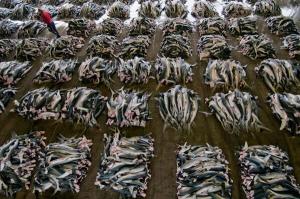
Sharks for sale in an EU port

Sharks for sale at an EU port

Spain closed its borders to imports from Belize (mostly tuna, mako, pelagics and swordfish) shortly after the announcement of the Commission’s decision. In 2013 Belize-flagged vessels were responsible for around 8% of the total number of unloading operations in Spanish ports such as Vigo and Marin, though their relative volume was closer to 0.5%. Vigo will be the port most affected by the resulting reduction in unloading activity.

Further, the withdrawal of the Spanish fleet from Guinea’s Exclusive Economic Zone (EEZ) following the country’s designation as a non-cooperating country will be costly for the Spanish sector: Over the past two years, 12 tuna purse seiners, 4 pole and line tuna vessels, 5 shrimping vessels and 4 cephalopod trawlers have operated in the Guinean EEZ, with combined annual captures of around 7,800 tonnes. The loss of the Guinean fishing grounds leaves the cephalopod fleet in particular with few available alternatives.

Despite these immediate losses, Minister Arias has stated his government’s support for catch certificate driven market measures and for the methodical assessment of flag State performance. He described these measures as necessary to ensure sustainability in fisheries and the long-term viability of the industry, with the caveat that flag State assessment must be carried out in a clear and transparent manner. The issue of flag State audit transparency has been the subject on ongoing tension with the Commission, with Spain openly and repeatedly requesting that the key criteria behind third country assessment and rationale for black-list inclusion be open to scrutiny.

The designation of Belize as a non-cooperating third country has been particularly controversial, as echoed in the recent publication of an article in National Geographic highlighting Belize’s conservation efforts in the face of the EU ban (http://newswatch.nationalgeographic.com/2014/03/14/european-union-fisheries-ban-ignores-belize-conservation-success-story/ ).

Mr. Arias challenged the Commission to address States “universally recognised as non-compliant within Regional Fisheries Management Organisations, such as Ghana or Papua New Guinea”. He also expressed concern over third countries “whose compliance with conservation measures is questionable” and that can still export to the EU fish captured in the EEZs of Belize, Guinea and Cambodia.

The Minister also warned against a lack of uniform application of the Regulation leading to the creation of “ports of convenience” within the EU. Trade diversions through such ports could undermine the success of the Regulation and prevent it from achieving its stated objectives.