What is IUU Fishing?

Post published by the House of Ocean on the 24th June 2014 on http://iuufishing.ideasoneurope.eu 

Illegal, unreported and unregulated (IUU) fishing is a major global fisheries problem. It has undesirable effects on fish stock survival, the marine environment and on human populations. 

Illegal Trawling in the Canary Islands (Google Earth)

Illegal Trawling in the Canary Islands (Google Earth)

IUU fishing results from the failure of States to monitor the fishing activity of their vessels and to enforce laws and regulations. Because of its furtive nature, IUU fishing undermines measures to manage fisheries sustainably, directly affecting law-abiding fisheries actors that compete for the same stock whilst bearing more of the regulatory and financial burden.

A cause of food and work insecurity in vulnerable coastal nations, IUU fishing also distorts competition as fishing operators who avoid compliance with laws and regulations gain competitive advantage. It reduces fishing opportunities for law-abiding operators, putting lawful fisheries at risk.

IUU fishing has been linked to crime at sea, including the trafficking of human beings, protected wildlife, weapons and drugs.

Typical IUU fishing behaviours include fishing without a valid licence, not recording or communicating catch data, fishing in restricted areas, targeting unauthorised species, using banned gear, falsifying or concealing the vessel’s identity or itinerary, obstructing the work of inspectors or enforcers, targeting undersized fish, engaging in unauthorised transhipments, participating in fishing or fisheries support activities with vessels in an IUU black list or  operating in breach of the conservation and management measures of Regional Fisheries Management Organisations.

The European Commission has judged the situation to be sufficiently serious as to put in place systems whereby States that do not put measures in place to address IUU fishing are identified. The European Union has now formally warned Vanuatu, Fiji, Panama, Sri Lanka, Togo, Korea, Ghana, Curacao, Philippines, and Papua New Guinea. Upon the Commission’s recommendation, The European Council took the decision earlier this year to ban seafood imports from Guinea, Belize and Cambodia, who are considered by the EU to be condoning IUU fishing.

The furtive nature of IUU fishing means that its true scale is difficult to calculate, though a 2009 study by Agnew D.J. and others suggests annual costs of between US $ 10 and 23.5 Billion. Around one-fifth of global marine captures is thought to be illegal in origin.


Illegal Fishing & Slavery Feed our Shrimp

The horrific story of slavery, torture and murder in the Thai shrimp farming industry revealed by the Guardian this week is not new. NGOs had raised alarm bells earlier year and some supermarkets and importers were aware of issues concerning human trafficking and abusive labour conditions (see March EJF report here).

Yet, as horrified western consumers recoil at the images and descriptions depicting the brutal treatment of those who produce their shrimp, one unfortunate myth continues to linger when it comes to farmed shrimp: that being farmed, they must be sustainable.

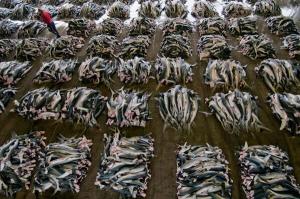
Trash Fish. Photo Credit: Reuters

Trash Fish. Photo Credit: Reuters

Farmed produce such as the shrimp in the Guardian’s story may well be fed by illegal fish and be tainted by abuse, crime and environmental degradation (to learn more about the environmental impact of shrimp farming, click here).

The shrimp in the Guardian’s story are fed with wild-caught fish. Wild fish caught by beaten down, terrified slaves on board of filthy fishing vessels. Sometimes the small fish, frequently unattractive to humans and hence referred to as ‘trash fish’, are caught by bottom trawlers using nets with tiny mesh that can devastate the marine environment.

Some trash fish can also be caught alongside tuna, a prime export to Western markets. Whilst tuna captures are recorded for exportation to carefully regulated European markets, no such measures are in place for the small fish destined to be ground-up in order to make shrimp and cattle feed.

Unfortunately for those slaves, farmed seafood products are not subjected to the same importation controls in the European Union as commercial wild-caught fish.

This loophole means that illegal fishing can indirectly enter our markets undetected and continue to fund abuse and devastation.

For the full Guardian story, click here: http://www.theguardian.com/global-development/2014/jun/10/-sp-migrant-workers-new-life-enslaved-thai-fishing

The UN Global Record of Fishing Vessels

The Global Record is a UN FAO project that involves a database of fishing vessels containing cross-checked, up to date vessel data provided by the vessel’s relevant authorities.

The FAO is currently developing the system and implementing it in parts. The FAO has been working with the European Commission in order to find a way to standardise the data in order to merge information from many different jurisdictions.

A unique number makes vessels easier to identify. Photo Credit: worldoceanreview.com

A unique number makes vessels easier to identify. Photo Credit: worldoceanreview.com

The Global Record will use a unique vessel identification number assigned to each vessel. This number does not change irrespective of how many times the vessel is sold or is re-flagged or re-named.

It is likely that the IMO numbering system will be used as a number assignment system, as it has been found to be highly compatible with the purposes of the Global Record in respect of vessels of 100 GT and above.

The IMO number is currently applied on a voluntary basis to vessels over 100 GT, and it is the prerogative of flag States to make this mandatory.

The unique identification number is useful not only as a way to track and identify vessels that may be engaged in illegal fishing operations, but also as a tool for traceability purposes.

Draft text of the latest discussion at the UN Committee on Fisheries in Rome now available via www.fao.org/cofi/24783-0f7ee5151e17e118b5384107032289df5.pdf

Ghana responds to new EU warning over illegal fishing

The European Commission has warned Ghana that a single additional case of illegal, unreported & unregulated (IUU) fishing could bring about the closure of the entire EU market to Ghanaian fish exports.

Mr Bayon Bilijo, Fisheries and Aquaculture Minister, has held a press conference to update stakeholders on his government’s developments to tackle IUU fishing in response to this warning, which was issued during EU-Ghana talks in May.

According to the Minister, Ghana has adopted a plan of action to control illegal fishing and to better manage its fisheries resources. The country’s legislative framework has been reinforced and new fisheries regulations will be promulgated later this year. Mr Bilijo has also reassured interested parties that all Ghanaian tuna vessel have now been fitted with tracking systems (VMS) as required of all EU trading partners.

However, despite the Commission’s warning Ghana’s trawlers have not yet been fitted with VMS, though the Minister indicated that this will be addressed over coming weeks.

Tuna imports from Ghana could be banned by the EU (photo credit: The Grocer)

Tuna imports from Ghana could be banned by the EU (photo credit: The Grocer)

The Ghanaian economy relies heavily on seafood processing and exportation to the EU and a ban could have deep repercussions in terms of revenue and employment losses. A local export firm, Myroc Food Processing (MFP), announced losses of $ 5 Million following the Commission’s formal warning (or ‘yellow card’) to Ghana in November 2013. MFP reportedly has had to reduce its workforce and export volumes substantially despite the fact that no ban is yet in place.

The European Commission’s decision to issue the yellow card was taken following significant IUU fishing concerns. These included notifications by the International Commission for the Conservation of Atlantic Tuna (ICCAT) regarding undisclosed cargo transfers (transhipments) between vessels flagged to Ghana in breach of ICCAT rules. To see the full text of the Commission’s decision, click here.

In April 2013, large amounts of processed tuna from Ghana were rejected upon arrival at port by Spain and other European countries. In the UK, the importation of numerous consignments of processed tuna from Ghana was suspended. Containers were kept in port incurring substantial quay rent whilst lengthy investigations into the IUU fishing allegations took place.

A ban on Ghanaian seafood could impact UK importers significantly, since the reported annual value of tuna imports from Ghana is in the region of £27 Million.

It is not yet known whether a possible ban would affect Ghanaian fisheries exports to other countries. It has been recently reported that Ghana and Seychelles have entered an agreement to bolster each other’s tuna exports to the EU, as both countries’ tuna seasons peak at different times of the year. An EU market ban may endanger commercial arrangements such as this one, given the strict origin and re-export rules adopted by the EU with the implementation of Regulation 1005/2008 (the IUU Regulation) in January 2010.

Sources:

http://www.seychellesnewsagency.com/articles/532/Ghana+and+Seychelles+to+top-up+each+others+tuna+exports

Ghanaian tuna exporter loses $5m due to EU trade snags

http://allafrica.com/stories/201406050752.html

http://www.thegrocer.co.uk/fmcg/fresh/tuna-imports-held-following-warnings-of-illegal-fishing/238499.article

Towards compulsory IMO numbers: EU seeks amendments to three IOTC resolutions

A quick look at the 2013 list of illegal, unreported and unregulated (IUU) fishing vessels of the Indian Ocean Tuna Commission (IOTC) shows why fishing illegally is an easy option for some: The vast majority of vessels in the list are only identified by temporary markers.

There is little evidence of where they are registered or what may be their true identity, since names and call signs can be changed. Only one vessel in the list carries an indelible mark of its true identity: A unique number assigned to it by the International Maritime Organisation (IMO).

Until December 2013 traditional fishing vessels – however large – had been exempted by the IMO of the obligation to obtain a number. Now this exemption no longer exists, but it is up to IMO member flag States to change their internal laws to effectively bind their fishing vessels to the obligation of obtaining an IMO number.

Three Regional Fisheries Management Organisations (RFMOs) have put in place requirements for large fishing vessels registered to fish in their areas to obtain IMO numbers. These are CCAMLR, ICCAT and WCPFC.

Despite claims to the contrary, the Indian Ocean Tuna Commission (IOTC) have not put in place an effective obligation for vessels over 24 metres registered to fish in its catchment area to obtain IMO numbers: The wording of resolutions 13/2 and 13/7 reads as simply enabling the notification of the fishing vessel IMO number to the IOTC once obtained.

An amendment has been proposed this month by the European Union to correct this. It requests that all IOTC craft authorised to operate in the area and any foreign vessels fishing in the IOTC for regulated species are obliged to obtain an IMO number by 1 January 2016.

Photo Credit: Richard White, Lindblad Expeditions

Vessels positioned for transhipment (credit: Richard White, Lindblad Expeditions)

Further, the proposal also concerns an older IOTC resolution (12/05) whereby large long-liners are authorised to carry out transhipment operations in the IOTC area. Resolution 12/05 does not mention IMO numbers, but the proposal intends to introduce a compulsory requirement for the IMO number of vessels receiving catch during transhipment to be communicated to the IOTC.

Source: http://www.iotc.org/documents/imo-number-establishing-programme-transhipment-large-scale-fishing-vessels-european-union-

Europe and illegal fishing: Ghana responds to the threat of market closure

Ghana has been in the news following its designation by the European Union as a possible candidate for its “List of Non-Cooperating Third Countries” (the infamous list of countries who fail to tackle illegal fishing carried out by their fleets).

Along with South Korea and Curacao, Ghana was firmly shown a yellow card by the European Commission in November last year after it emerged that it had failed to identify and prevent infractions of ICCAT conservation and management measures established carried out by its tuna fleet. For the uninitiated, ICCAT is the International Commission for the Conservation of Atlantic Tunas, and it governs the fishery of tuna and other highly migratory species in an important region of the Atlantic.

The European Commission has already cracked down on countries it believes to be lenient on illegal fishing (Belize, Cambodia and Guinea). The effect of this has been that the three countries, now classed as “Non-Cooperating”, have lost their ability to export their fish to the EU until they can demonstrate that they have cleaned up their act. Further, European fleets are no longer working in the three EEZs and the three countries have lost the corresponding licence revenues.

A red card from the European Commission could have dire consequences for Ghana. It relies heavily on European markets and European investment for the production and processing of fish and, in a country where 10% of the population relies on fisheries for work the damage could be profound.

But the West African country has reacted: it has produced a fisheries management plan and has just announced that it will be joining a 5 year programme, funded by GEF, to improve monitoring, control and compliance of its tuna fleets. The programme, endorsed by WWF, involves rolling out technology that will enable to better estimate tuna catches.

Meanwhile, in has also received public support from Japan. The Japanese government has made it clear that it will partner Ghana and will contribute towards its development, possibly hinting at the fact that, should the EU withdraw its commercial partnerships with Ghanaian fisheries, other powerful fishing nations will be prepared to fill the gap.

Original Articles:

http://www.ghanaweb.com/GhanaHomePage/business/artikel.php?ID=309095

Ghana teams up with WWF, ISSF, FAO in illegal fishing fight

Maritime Insecurity in the Gulf of Guinea: Illegal Fishing Matters

Like piracy, illegal, unreported and unregulated (IUU) fishing tends to occur in areas marred by insecurity challenges, underdevelopment and poor governance. The European Commission has identified IUU fishing as a key risk for its strategy purposes in the Gulf of Guinea.

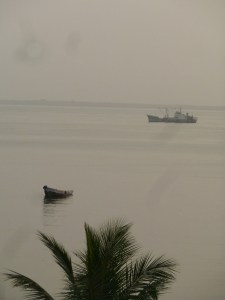
Fishing vessel at sunset

Despite ongoing overexploitation concerns, the Gulf of Guinea continues to be a strategically important fishing ground for European fleets. The existence of bilateral fisheries agreements between the EU and Cape Verde, Cote D’Ivoire, Gabon, Sao Tome & Principe and Mauritania speak for themselves. Further, private licence agreements also provide European vessels with access to the EEZs of other nations in the region.

A recent article by Ioannis Chapsos (see full text here), of the Centre for Peace and Reconciliation Studies, also highlights the importance of the Gulf of Guinea as a source of oil and gas for the EU, particularly in the light of recent tensions with the Russian Federation (currently Europe’s key energy supplier). 

It is therefore hardly surprising that the EU is seeking to understand and address insecurity issues in the Gulf. What is interesting is that IUU fishing is being given such relevance in the context of European objectives. Perhaps this is a sign of the EU’s recognition that illegal fishing has a powerful destabilising potential. It can derail fledgling coastal development and resilience initiatives as well as persistently undermine attempts at sustainability in the fishing industry itself. 

Implementation efforts by the Gulf of Guinea Commission, ECCAS and ECOWAS concerning their ‘Code of Conduct Concerning the Repression of Piracy, Armed Robbery Against Ships and Illicit Activity in West and Central Africa’ will no doubt be key to future EU strategy development and outcomes.

With the region’s economic outlook and value as emerging market raising expectations despite persistent risks, there is unprecedented interest in IUU fishing, its effects on West Africa and, more widely, on Europe’s long term interests.


EU Ban on IUU Products: Spain critical of the Commission, but backs trade measures despite cost

The Spanish Minister for Agriculture and Fisheries, Miguel Arias Cañete, has highlighted in a press note the leading role assumed by his government in the application of port and market measures designed to combat illegal, unreported and unregulated (IUU) fishing.

The IUU Regulation, which came into force in 2010, has enabled the European Commission to identify a number of flag States as countries that are failing international commitments to combat IUU fishing. In November 2013 the Commission designated Belize, Cambodia and Guinea (Conakry) as ‘non-cooperating countries’, following earlier warnings. The move, ratified by the European Council and published today, has resulted in a ban on seafood exports from those three countries into the EU.

Sharks for sale in an EU port

Sharks for sale at an EU port

Spain closed its borders to imports from Belize (mostly tuna, mako, pelagics and swordfish) shortly after the announcement of the Commission’s decision. In 2013 Belize-flagged vessels were responsible for around 8% of the total number of unloading operations in Spanish ports such as Vigo and Marin, though their relative volume was closer to 0.5%. Vigo will be the port most affected by the resulting reduction in unloading activity.

Further, the withdrawal of the Spanish fleet from Guinea’s Exclusive Economic Zone (EEZ) following the country’s designation as a non-cooperating country will be costly for the Spanish sector: Over the past two years, 12 tuna purse seiners, 4 pole and line tuna vessels, 5 shrimping vessels and 4 cephalopod trawlers have operated in the Guinean EEZ, with combined annual captures of around 7,800 tonnes. The loss of the Guinean fishing grounds leaves the cephalopod fleet in particular with few available alternatives.

Despite these immediate losses, Minister Arias has stated his government’s support for catch certificate driven market measures and for the methodical assessment of flag State performance. He described these measures as necessary to ensure sustainability in fisheries and the long-term viability of the industry, with the caveat that flag State assessment must be carried out in a clear and transparent manner. The issue of flag State audit transparency has been the subject on ongoing tension with the Commission, with Spain openly and repeatedly requesting that the key criteria behind third country assessment and rationale for black-list inclusion be open to scrutiny.

The designation of Belize as a non-cooperating third country has been particularly controversial, as echoed in the recent publication of an article in National Geographic highlighting Belize’s conservation efforts in the face of the EU ban (http://newswatch.nationalgeographic.com/2014/03/14/european-union-fisheries-ban-ignores-belize-conservation-success-story/ ).

Mr. Arias challenged the Commission to address States “universally recognised as non-compliant within Regional Fisheries Management Organisations, such as Ghana or Papua New Guinea”. He also expressed concern over third countries “whose compliance with conservation measures is questionable” and that can still export to the EU fish captured in the EEZs of Belize, Guinea and Cambodia.

The Minister also warned against a lack of uniform application of the Regulation leading to the creation of “ports of convenience” within the EU. Trade diversions through such ports could undermine the success of the Regulation and prevent it from achieving its stated objectives.

Buyer beware: EU bans fish imports over illegal fishing concerns

After months of warnings by the Commission, the European Council has finally banned seafood imports from Belize, Guinea and Cambodia over fears that the three countries have disregarded obligations to address illegal, unreported and unregulated (IUU) fishing. EU member States will now have to implement the ban and European fleets will not be able to operate in the EEZs of the three blacklisted countries.

Several tuna vessels owned by EU suppliers MW Brands (part of the Thai Union Group) and Pevasa are flagged to Belize and, unless they are de-registered and issued with a new flag by a country able to trade with the EU, they will not be able to supply tuna to the UK or any other Member State.

This could pose significant problems for importers as they will need to renegotiate and/or to find new suppliers in an effort to maintain a steady supply of sought after tuna products.

The EU’s ban has followed months of warnings not just to the three blacklisted countries, but also to Panama, Vanuatu, Fiji, Sri Lanka and Togo. Having been seen as keen to cooperate, they have been given additional time to enact and implement credible measures against illegal fishing.

Critically, the European Commission has also issued warnings to South Korea, Curacao and Ghana with regard to IUU fishing controls over distant water fishing fleets. EU interests have invested heavily in the Ghanaian tuna processing industry and a ban on imports from Ghana could be extremely difficult for the trade.

Fishing Vessels in Guinea

Fishing Vessels in Guinea

European Council Regulation 1005/2008, the legal tool that has brought about the ban, incorporates key aspects of the International Plan of Action to Prevent, Deter and Eliminate IUU Fishing and the Port States Measures Agreement (PSMA), an international convention hailed by many as a leading legal tool with great potential to address IUU fishing. Questions are being asked as to whether the United States, whose Senate has recently given the green light for the ratification of the PSMA, will be the next global market State to develop a comprehensive system of port and market filters similar to that in place in the EU (http://www.nmfs.noaa.gov/ia/iuu/portstate_factsheet.pdf)

For importers and their insurers this highlights the need to be vigilant: discernment on illegal fishing is now more important than ever, as is insisting on supply chain transparency. Choosing only fish suppliers that can demonstrate compliance with European and International laws will help deflect supply chain instability, contribute to the sector’s resilience and promote fair play.

Illegal, Unregulated and Unreported (IUU) fishing in the Mediterranean

A thoughtful post about IUU fishing in Mediterranean waters and a reminder that illegal fishing does not just happen in the EEZs of developing countries. Further, IUU fishing is not attributable to monster ships only: some artisanal and leisure fishermen do breach regulations devised to protect fish stocks from overexploitation, sometimes using destructive methods such as drift nets and monofilament. In all, IUU fishing represents a great and persistent risk to anyone whose long-term interests depend on a productive ocean.

Unknown's avatarMedReAct

The nature and extent of IUU fishing in the Mediterranean Sea is not clearly known at present. It is known, however, that these dubious activities are becoming a common practice in recent years. Mediterranean Flag states currently report several IUU fishing related issues mostly related to the Mediterranean fleet. In 2013 the General Fisheries Commission for the Mediterranean (GFCM) identified purse seine, trawl and driftnets as the gears that are mostly involved in IUU fishing. Repeated serious 
infringements related to the use of driftnets were documented in Italy,
 showing the extent of illegal activities by
 over 300 Italian driftnetters.  A  ban on
 small scale driftnets in the Mediterranean would allow closing the current regulatory loopholes that illegal fishing operators have abundantly used to elude controls.

View original post