Ocean law students training to become researchers: when it comes to AI, are you the boss?

As any postgraduate supervisor knows, there are few things more rewarding that the attention and progress of a student who is keen to understand the research process and to use it.  For the past five years I have had the privilege of being able to train young law students and practitioners who want to learn the ropes of academic research. These experiences have inspired me to write the House of Ocean blog again, but now I will need to move away from IUU fishing control, despite it being as urgent and fascinating as it ever was.

While I am still producing academic research in the field of fisheries governance, the role of this blog will principally be to support student researchers, particularly those interested in the development and application of international law for the regulation of ocean uses. The new blog will contain tips and insights from my own research practice as well as issues I have observed when training postgraduate students (with complete confidentiality, of course).

The intention of this is to help developing researchers to strengthen their work and, hopefully, instil a commitment to understand and utilise the law to ensure a healthy ocean for the benefit of all. I have so far been lucky enough to have an increasing number of students interested in different aspects of fishing activity and trade regulation, but I hope that the blog will be helpful to law students well beyond that relatively small pool.

To start this new lease of life for the House of Ocean blog, I would like to make an acknowledgement of AI as a research tool. Yes, like the metaphorical double-edged sword, AI is both powerful and dangerous. And it is dangerous principally for the trainee researcher, but also for supervisors and examiners. With my examiner hat on, I have read depressingly superficial and vacuous AI generated drafts which and demonstrated only an almost total absence of understanding of appropriate sources and how to use them in research.  I suspect having to read them robbed me of several grey cells and I cannot even imagine what the effect might have been on the drafters’ brains. I have toyed with generative AI myself and, depending on prompts, it can generate reports based usually on a blend of freely accessible sources. Students should be aware that they are wasting precious time and resources in producing such pointless, unimaginative, and often mediocre work. It will take you nowhere and will place you in a subservient position to an AI you cannot understand, and this ultimately will undermine your ability to become a researcher. The AI will become your boss, and a mediocre one at that.

This said, it is also true that AI can be a friend to the researcher if utilized properly and with integrity. These good uses are logical: any AI is nowadays able to read large datasets and vast volumes of literature in a short period of time, if properly prompted. Why not therefore use it to get started with the basics of a literature review? Prompt it with the questions that guide your research (yes, there will be another blog post on the formulation of appropriate research questions). Ask it to browse the types of literature you need to look into. Don’t rely solely on generative AI (and for pity’s sake, don’t rely on generative AI to produce your analysis – see the previous section). Use to do an initial scoping of sources. Then, contrast it with another type of AI: some AI tools that you can use for free will fully scope academic databases and will identify relevant papers, even if they can only access abstracts. There are AIs that will map and help you visualize the reference connections across papers. These tools can help you ensure that your literature includes all the relevant papers you need. This is important, because good research depends on a sufficiently comprehensive literature review, as well as being able to discern foundational from derivative sources (tip: papers that have been referenced many times are often important – check them out to see how they have influenced the other papers the AI has helped you identify).

In my opinion, you should not rely on any AI’s ability to summarise a source: make sure you check the references, access the papers and read them yourself, making any annotations that are useful to your enquiry. Reading the abstract, the introduction and the conclusion will show you more about a paper than the AI summary. You will soon see that the AI summary might have provided a reasonable starting point, but was likely too generic, missing detail and nuance. But yes, let yourself be guided by the ability of the AI to identify a comprehensive number of sources and to analyse and map citations and their cross-references. This will help you understand the relationships between the different papers and which authors have engaged with one another. Let the AI help you stand on the shoulders of giants, but make sure that the intellectual analysis of the sources is yours. You are the boss – you tell the AI what to do and you decide what matters, not the other way around.

Mercedes Rosello PhD, October 2025

Some useful AI tools to help with literature reviews:

Connected Papers | Find and explore academic papers

SciSpace AI Research Agent | 150+ Tools, 280 M Papers

ResearchRabbit: AI Tool for Smarter, Faster Literature Reviews

 elicit.com

Beyond the WTO Fisheries Subsidies Agreement: a New Policy Brief Compendium.

In 2023, the Mercatus Center (George Mason University, in Virginia) and the Center for Governance and Markets (University of Pittsburgh, Pennsylvania) hosted a joint roundtable event dedicated to addressing persistent problems in global overfishing. The inspiration behind the event had been the launch of the Fisheries Subsidies Agreement of the World Trade Organization (WTO), which provided the unifying thread for a series of discussions by several experts across different fields. The roundtable took place in Pittsburgh in the Summer, and preceded a number of written contributions that were subsequently published as part of a compendium of Policy Briefs hosted by the Mercatus Centre, all of which are accessible here. 

The purpose of the compendium is to explore solutions for enduring global problems involving overfishing and illegal fishing, and to inform the debate on fisheries subsidies, as well as related issues, as they are periodically debated under the auspices of the WTO and other economic and policy fora. Christine McDaniel and Ilia Murtazashvili, respectively of the Mercatus Centre and the University of Pittsburgh, have recently published a very useful paper with a summary of the topics that have been covered by all Policy Briefs in the compendium, which can be accessed here. As can be seen from the references to the topics covered by the different authors, concerns are varied and include implementation issues (particularly in the context of indigenous and small-scale fisheries) as well as agreement weaknesses and loopholes, and insight into the governance of fisheries resources as a shared concern of the global community.

A summary of all the contributions as well as links to each individual paper is kindly provided by the authors for ease of reference. My own contribution to the compendium, named ‘Can the WTO Help Fight IUU Fishing through Clarity-Enhancing Market Measures?’ can be accessed here. I hope you find this and other contributions interesting and useful.

With very best wishes for the New Year

Mercedes

Image credit: Juan Vilata

Human rights in fisheries: the student’s view

Eleanor Kochman is a history undergraduate at Peterhouse, Cambridge University. She intends to take a postgraduate conversion course in Law and hopes to become a barrister. This is her first ever academic publication, and we are certain it won’t be her last.

A paradigmatic shift is underway in international legal discourse and development policy. Instead of solely focussing on local livelihoods and national economic growth, there is a growing emphasis on a “rights-based approach” which highlights the importance of human rights to development outcomes.[1] In this context, this report summarises the main human rights abuses taking place in the fishing sector, and will provide an overview of where the worst abuses might be occurring geographically. The report will then review key international instruments to see whether and how they address the abuses mentioned. These are the following : the Universal Declaration of Human Rights (UDHR), the International Covenant on Economic, Social and Cultural Rights (ICESCR) and the International Covenant on Civil and Political Rights (ICCPR).

  This report will begin by providing a generalised overview of types of human rights abuses that take place in the small-scale fisheries sector. It must firstly be acknowledged this breakdown is hardly comprehensive; human rights cases often fall into the category of “grey literature”.[2] This is because many of these abuses take place in places in need of capacity enhancement and often with a weak legal and police apparatus. Often, low levels of literacy make the abuses difficult to document. Ratner, Åsgård and Allison, however, highlight several main categories of human rights abuses.[3] The first is forced eviction, an example of which is the conversion of common property mangrove forests used by fishers into private shrimp farms such as in Ecuador and Bangladesh.[4] The second category is detention without trial. This issue particularly affects small fishing communities with a nomadic culture (such as the Bede in Bangladesh) who stray across national borders and are detained for extended periods of time without trial.[5] The third category is forced labour and unsafe working conditions. Research by Pearson on Thai fishing vessels reveals 20% of migrant workers on fishing boats and 9% in fish processing allege they are forced to work, much higher statistics than in the agricultural sector.[6] Finally, rights abuses take the form of violence and threats to personal security. Civil war can result in human rights atrocities regarding small-scale fishermen taking place, such as the massacre of Tamil Nadu fishermen in the Sri Lankan civil war.[7] There are surely many more categories to be uncovered, but these are how the known abuses can broadly be categorised.

  Due to a lack of systematic documentation, it is difficult to pinpoint where these abuses are taking place although author and NGO observation suggests the majority might be occurring in Africa and Asia. More specifically (and according to the table constructed by Ratner, Åsgård and Allison), forced eviction is noted as occurring often in the Philippines, Ghana, Lake Malawi, Cambodia and Indonesia.[8] Detention without trial seems to be a prevalent issue in India and Pakistan’s borders, (most likely due to a multitude of geographical, religious, cultural, colonial and historic reasons). Forced labour and unsafe working conditions seem to be a particular feature of the Thai small-scale fisheries sector, and threats to personal security are recorded as occurring in Sri Lanka, Kerala and Lake Malawi.

  This report will now review three different international bodies of law, starting with the UDHR, and will assess how far these bodies cover human rights abuses mentioned. Regarding forced eviction, Article 12 of the UDHR states “No one shall be subjected to arbitrary interference with his privacy, family, home or correspondence”. Forced eviction could come under arbitrary interference with the family and home, but ‘arbitrary’ could be more explicitly defined and ‘interference’ is perhaps too mild a term for ‘forced eviction’. Article 17.2 comes closer to tackling the issue of forced eviction, stating “No one shall be arbitrarily deprived of his property”; yet once again, ‘arbitrary’ remains undefined and open to interpretation, and once again, the issue of forced eviction more explicitly is not addressed. Problems with these articles arise when something might not be ‘arbitrary’ (i.e. a justifiable removal of individuals from their property for the greater good), but could be technically illegal. This definitional woolliness means both states and individuals could find legal loopholes in order to unfairly remove an individual fisherman from his property.

Concerning detention without trial, Article 3 proclaims “Everyone has the right to life, liberty and security of person”; as such, detention without trial could be violating somebody’s right to liberty. Yet once again, the UDHR could be more specific on this, as ‘liberty’ as a term can have a myriad of different interpretations. Article 13.1 declares freedom of “movement and residence within the borders of each state”, but offers no acknowledgement of nomadic communities who may not conform with the Western concept of the nation-state and suggests no humane protocols for dealing with those who illegally cross into the borders of another state.

The UDHR is better at dealing with unsafe working conditions. Article 23.1 mentions everyone has “the right to work, to free choice of employment, to just and favourable conditions” and Article 24 asserts the right to rest and leisure. Application of these articles would help to alleviate terrible conditions faced by many small-scale fishermen. The UDHR could be more explicit on forced labour. ‘Free choice of employment’ can be interpreted to refer to the freedom to take on employment regardless of your race, religion, sex, etc. rather than being forced to work. Article 4 states nobody should be held in “slavery or servitude”, but this is not exactly the same as forced labour, which may feature remuneration unlike slavery.

Finally, the UDHR attempts to cover violence and threats to personal security through Article 5, which states “No one shall be subjected to torture, degrading treatment or punishment”. However, this does not sufficiently cover arbitrary violence and damage to property experienced by small-scale fishermen, such as those in Senegal interviewed by DuBois and Zografos who reported being involved in incidents where large boats damaged or destroyed fishing gear of small boats.[9] This kind of damage to property, physical and mental wellbeing cannot be categorised as torture or punishment, and only “degrading treatment” in the loosest sense. Furthermore, in terms of threats to personal security, the UDHR gives no indication as to protection of individual rights during extenuating circumstances such as civil war.

Overall, the UDHR is an idealistic document that aims to remain apolitical and transcend individual cultures, religions, and political ideologies. In doing so, its articles are so general they cannot often be used to sufficiently protect and uphold rights of small-scale fishermen.

  The ICESCR is a multilateral treaty adopted by the United Nations General Assembly (GA) on 16 December 1966. It focuses on positive economic, social and cultural rights, and should be viewed one half of a whole with the ICCPR.[10] Unlike the UDHR, the ICESCR is much clearer on the issue of forced eviction. Forced eviction, defined as “the permanent or temporary removal against the will of individuals, families and/or communities from the homes and/or land which they occupy, without the provision of, and access to, appropriate forms of legal or other protection” is a prima facie violation of the covenant.[11] Article 11.1 also recognises the right to housing; forced eviction is sufficiently covered by the ICESCR. The issue of detention without trial is covered less comprehensively. The ICESCR does not feature any articles concerning setting a time limit for detainment or circumstances under which somebody can be detained. Article 2.3 states “developing countries may determine to what extent they would guarantee the economic rights recognised in the present Covenant to non-nationals”. This article does have potential to threaten small nomadic fishing communities and leave them open to unlawful detainment disguised as a justifiable protection of economic rights to nationals. The ICESCR more comprehensively covers issues of forced labour and unsafe working conditions. Article 7 makes it clear workers must have remuneration, safe and healthy working conditions as well as rest and leisure. Work as per Article 7 must be “decent work” with “just and favourable” working conditions. Whilst these terms could be defined more specifically, they broadly cover issues of forced labour and unsafe working conditions. Where the ICESCR is too general is on the issue of violence and personal security. Article 1.1 boldly proclaims “All peoples have the right to self-determination” and the freedom to determine their own political status and pursue economic, social and cultural development. Yet this proclamation does not delve into any specifics. Furthermore, there is no acknowledgement of how these rights may be affected by extenuating circumstances such as civil war. However, it must be taken into account the ICESCR works in conjunction with the ICCPR which does indeed cover issues such as these. A bigger problem with the ICESCR is reservations. Many developing countries such as Bangladesh, Thailand and Pakistan hold multiple reservations to articles in the ICESCR, for example Bangladesh interprets Article 1 as applying in the historical context of colonialism.[12] The ICESCR itself contains few legal mechanisms to deal with the issue of reservations, meaning it fails in many ways to sufficiently support and empower small-scale fishermen despite seemingly having the articles necessary to do so.

  The ICCPR, which focuses on negative civil and political rights, should be viewed as the essential complement to the ICESCR.[13] As such, where there are certain omissions, it should be remembered these are covered by the other body. For example, the ICCPR is less detailed on forced eviction than the ICESCR; in fact, there is no specific mention of forced eviction other than the generalised recognition in Article 1  no person may be deprived of their means of subsistence (which is hardly specific to forced eviction). Yet, when working with the ICESCR, this issue is covered thoroughly. The ICCPR is clear on forced labour, with unsafe working conditions remaining the domain of the ICESCR. On forced labour, the sub-clauses of Article 8.3 makes the only times when an individual can be compelled to work without their own will explicit and does clearly define forced or compulsory labour. It clearly indicates what does not count as forced labour, such as military service. Regarding detention without trial, Article 9.3 makes it clear anyone arrested or detained on a criminal charge “shall be entitled to trial within a reasonable time or to release”. It could be more explicit on what constitutes a “reasonable time”; this broad phrase is very much open to interpretation and could be exploited by certain states for their gain. Developing countries could use excuses such as resource access to suggest an extended period of detention is in “reasonable time”, thus holding an offender, such as a fisherman crossing borders, for too long a period of time. Finally, the ICCPR does cover violence and threats to personal security faced by fishermen. Article 6 recognises the individual’s “inherent right to life”, a “supreme right” from which no derogation can be permitted. It also establishes there should be no arbitrary killing of individuals by security forces. This could be extended to arbitrary harm more generally, as DuBois and Zolgrafos’s Senegalese fishermen faced not loss of life but loss of property and injury due to the large fishing vessels they faced. Article 4 does make it clear what should be done in extenuating circumstances such as civil war, protecting the right to life which would in practice support those such as the Tamil Nadu fishermen. Consequently, in conjunction with the ICESCR, the ICCPR does seem to cover many problems faced by small-scale fishermen. Once again the issue is both with uptake and enforcement. Countries such as Bangladesh, Pakistan and the Gambia all have various reservations to the articles of the ICCPR. Furthermore, a 2013 study has shown the ICCPR has had a limited impact for issue areas where legally admissible evidence is costly to produce and standards of proof are high, thus having insignificant effects in respect to personal integrity rights.[14] Given the difficulties in documenting human rights abuses faced by small-scale fishermen, the small-scale fisheries sector can certainly be said to suffer from this, thus rendering the ICCPR less useful practically in defending these rights. 

  In conclusion, individuals involved in the small-scale fisheries sector are subject to a myriad of human rights abuses, ranging from forced eviction to violence in everyday life. These abuses occur primarily in developing countries, generally in Africa and Asia. There are instruments of international law to deal with these abuses. However, the UDHR, despite being foundational, is too abstract and general; its apoliticism and idealism makes it too unspecific to make any real difference. The ICESCR and ICCPR offer more practicality the UDHR and must be viewed as two halves of a single whole. Together, they cover many of issues faced by small-scale fishermen; yet neither is entirely perfect in terms of legislation). They are also hampered by reservations to their articles and by the lack of documentation regarding human rights abuses. Taking measures to better document these abuses is the next step to ensuring appropriate legislation can be both made and applied in developing countries. In doing this the “rights-based approach” can find success and make the small-scale fisheries sector more conducive to national economic growth, better for individual and communal well being, safer for people, and kinder to the environment.

Bibliography

Primary

United Nations, Universal Declaration of Human Rights, 1948.

United Nations, International Covenant on Economic, Social and Cultural Rights, 1966.

United Nations, International Covenant on Civil and Political Rights, 1966.

“UN Treaty Collection: International Covenant on Economic, Social and Cultural Rights”. UN, 1976.

CESCR General Comment 7: The right to adequate housing: forced evictions”. UN OHCHR, 1997.

Secondary

Bollen, K.A., 1992. Political rights and political liberties in nations: an evaluation of rights measures, 1950 to 1984. In: Jabine, T.B., Claude, R.P. (Eds.), Human Rights and Statistics: Getting the Record Straight. University of Pennsylvania Press, Philadelphia.

DuBois, C., Zografos, C., 2012. Conflicts at sea between artisanal and industrial fishers: inter-sectoral interactions and dispute resolution in Senegal. Marine Policy 36.

Fukuda-Parr, S., 2003. The human development paradigm: operationalizing Sen’s ideas on capabilities. Femin. Econ. 9 (2–3).

Gupta, C., 2007. Bonded bodies: coastal fisherfolk, everyday migrations, and na-tional anxieties in India and Sri Lanka. Cult. Dyn. 19 (2–3).

Islam, M.M., Chuenpagdee, R., 2018. Nomadic Fishers in the Hilsa Sanctuary of Bangladesh: The Importance of Social and Cultural Values for Wellbeing and Sustainability. In: Johnson, D., Acott, T., Stacey, N., Urquhart, J. (eds) Social Wellbeing and the Values of Small-scale Fisheries. MARE Publication Series, vol 17.

Lupu, Y., 2013. “Best Evidence: The Role of Information in Domestic Judicial Enforcement of International Human Rights Agreements”. International Organization. 67 (3).

Ratner, B., Åsgård, B., Allison, E., 2014. Fishing for justice : Human rights, development, and fisheries sector reform, Global Environmental Change, vol 27.


[1] Fukuda-Parr, S., 2003. The human development paradigm: operationalizing Sen’s ideas on capabilities. Femin. Econ. 9 (2–3) 301–317.

[2] Bollen, K.A., 1992. Political rights and political liberties in nations: an evaluation of rights measures, 1950 to 1984. In: Jabine, T.B., Claude, R.P. (Eds.), Human Rights and Statistics: Getting the Record Straight. University of Pennsylvania Press, Philadelphia.

[3] Ratner, B., Åsgård, B., Allison, E., 2014. Fishing for justice : Human rights, development, and fisheries sector reform, Global Environmental Change, vol 27, 120-130.

[4] Ibid. 123

[5] Islam, M.M., Chuenpagdee, R., 2018. Nomadic Fishers in the Hilsa Sanctuary of Bangladesh: The Importance of Social and Cultural Values for Wellbeing and Sustainability. In: Johnson, D., Acott, T., Stacey, N., Urquhart, J. (eds) Social Wellbeing and the Values of Small-scale Fisheries. MARE Publication Series, vol 17.

[6] Ratner, B., Åsgård, B., Allison, E., 2014. Fishing for justice : Human rights, development, and fisheries sector reform, Global Environmental Change, vol 27, 123 & Pearson, E., 2006. Sureeporn Punpuing, Aree Jampaklay, Sirinan Kittisuksathit, & Aree Prohmmo. The Mekong Challenge – Underpaid, Overworked and Over- looked: The realities of young migrant workers in Thailand, vol. 1. International Labour Office, Bangkok.

[7] Gupta, C., 2007. Bonded bodies: coastal fisherfolk, everyday migrations, and na-tional anxieties in India and Sri Lanka. Cult. Dyn. 19 (2–3) 237–255.

[8]  Ratner, B., Åsgård, B., Allison, E., 2014. Fishing for justice : Human rights, development, and fisheries sector reform, Global Environmental Change, vol 27, 123

[9] DuBois, C., Zografos, C., 2012. Conflicts at sea between artisanal and industrial fishers: inter-sectoral interactions and dispute resolution in Senegal. Marine Policy 36, 1211–1220.

[10] United Nations, International Covenant on Economic, Social and Cultural Rights, accessed 03/09/2023 : https://www.ohchr.org/en/instruments-mechanisms/instruments/international-covenant-economic-social-and-cultural-rights

[11] “CESCR General Comment 7: The right to adequate housing: forced evictions”. UN OHCHR. 20 May 1997, accessed 03/09/2023.

[12] “UN Treaty Collection: International Covenant on Economic, Social and Cultural Rights”. UN. 3 January 1976, accessed 03/09/2023 : https://treaties.un.org/Pages/ViewDetails.aspx?src=IND&mtdsg_no=IV-3&chapter=4&clang=_en

[13]  United Nations, International Covenant on Civil and Political Rights, accessed 03/09/2023 : https://www.ohchr.org/en/instruments-mechanisms/instruments/international-covenant-civil-and-political-rights

[14] Lupu, Y., 2013. “Best Evidence: The Role of Information in Domestic Judicial Enforcement of International Human Rights Agreements”. International Organization. 67 (3): 469–503.

Does the new EU-NZ trade deal strengthen fisheries governance in the Indo-Pacific?  

In 2022 the European Union (EU) and New Zealand (NZ) concluded a free trade agreement, signed on 9 July 2023, which has been heralded as a landmark setting instrument for the protection of environmental concerns. The purpose of this blog post is to offer insight into the features of the agreement in matters of marine fisheries and into whether and how it will preserve the EU Single Market form the erosion of existing commercial fishing regulation and control standards.

Image credit: Euractiv.com

The Commission had announced prior to signature that the trade deal with New Zealand would not change European standards, and that the agreement would support international environmental commitments already made, while preserving each party’s right to conduct the regulation production and trade processes within their respective jurisdictions. Both the EU and NZ highlighted that the effective implementation of applicable international environmental agreements would be considered a matter of priority. The Commission indicated that attention would be paid to areas where trade and environmental agendas can support each other, including marine fisheries, and that care would be taken to promote trade in legally harvested and sustainable products.[1] Such manifestations imply the importance that the parties have attached to compliance with and implementation of international fisheries-relevant agreements, such as the Convention on International Trade in Endangered Species (CITES), the Agreement for the Implementation of the Provisions of the United Nations Convention on the Law of the Sea of 10 December 1982 relating to the Conservation and Management of Straddling Fish Stocks and Highly Migratory Fish Stocks (Fish Stocks Agreement or UNFSA), and other relevant treaties.

In the next few paragraphs, I review the fisheries-specific provisions of the EU-NZ trade agreement with a view to unwrapping the ways in which the agreement strengthens fishery governance and, if so, what tools and mechanisms it puts in place.  

That the agreement contains explicit references to fisheries conservation and management and IUU fishing control should not come as a surprise: Firstly, the EU has the ambition to consolidate its presence in the Indo-Pacific, where it sees New Zealand as an important partner.[2] EU strategy in the region has prioritised prosperity alongside ocean governance and security, including maritime security, amongst other areas.[3]  By implication, these priorities involve consolidating the presence and influence of EU in cooperation fora in the region, including fisheries governance institutions, and cooperating with trade partners to cement common approaches.[4] Secondly, sustainable trade and stopping the decline of biodiversity loss are also stated priorities of the EU in the region,[5] and it is clear that the Commission sees trade partnership agreements as an important part in the attainment of such strategy objectives.[6]

The agreement considers fishery products to be ‘wholly obtained’ in one party within the meaning of Art. 3.4(1) if they have been captured inside the territorial sea of that party (subparagraph f), or captured as part of marine fishing operations outside of the territorial sea in accordance with international law by a vessel flagged to a party (subparagraph h), or produced on board of a factory ship flagged to a party provided that the product results from the captures just specified (subparagraph i). Further, as is logical, habitual fishery management mechanisms such as the restriction of captures via the use of quotas, licences, or other tools, are excluded from the prohibition to restrict market access due to the establishment of quantitative limitations on enterprises, transactions, assets, or operations, established in Article 10.5(a) of the agreement.

An important provision is contained in Article 16.4, prohibiting harmful fisheries subsidies, and establishing cooperation mechanisms of a legal and non-legal nature, which include the implementation of the WTO Agreement on Fisheries Subsidies of June 2022. The effect of this is, inter alia, the prohibition of subsidies that contribute to enabling IUU fishing operations, as well as subsidies that sustain overcapacity and overfishing. This complemented by a broad accountability-contributing mechanism contained in Article 16.5, whereby the parties agree to disclose the form, quantum, recipients, and legal bases of subsidies within one year of the entry into force of the agreement and biannually thereafter.

The broadest section of the agreement with regard to fisheries governance is comprised in the series of provisions contained in Article 19.10, concerning trade and sustainable management of fisheries and aquaculture. The article commences with the acknowledgement of the role of trade in the management of fisheries and the broader context of marine resources and ecosystems, and the dependency of the sustainability of trade in fishery products from fishery management, removal of harmful subsidies, and IUU fishing control, highlighting the need for action to attain those ends (respectively subparagraphs 1 and 2). This provides context for a series of further declarations and commitments in subsequent subparagraphs.

Article 19.10(3) in subparagraph (a) sets out conservation and management obligations for the parties to “implement long-term conservation and management measures to ensure sustainable use of marine living resources based on the best scientific evidence available, the application of the precautionary approach and internationally recognised best practices” consistent with the LOSC and with applicable international fisheries law. The purpose of this obligation is stated to be to prevent overfishing and overcapacity, minimise by-catch of on-target species and juveniles, and promote the recovery of overfished stocks (respectively subparagraphs (i), (ii), and (iii)). Subparagraph (b) then establishes obligations in regard to international cooperation, and directs the parties to “participate constructively in the work of the regional fisheries management organisations” of which they are members, observers, or cooperating non-members, with the aim of achieving sustainability and good governance. Lastly, subparagraph (c) requires the parties to “implement an ecosystem-based approach to fisheries management” to minimise the broader impacts of fishing activities, particularly with regard to species recognised as threatened.

Paragraphs (4) and (5) of Article 19.10 address IUU fishing, commencing with an acknowledgement of international cooperation and coordination framed by international instruments, and following with an obligation to support monitoring, control, surveillance, and compliance and enforcement systems and measures serving to deter nationals and registered vessels from engaging or supporting IUU fishing and to responds when this occurs, and to encourage traceability tools, cooperation, and information exchange. Finally, paragraph (7) brings the article to an end by establishing a cooperation duty in trade related matters, whether bilaterally, regionally, or globally, and in all relevant fora, with a view to promoting sustainable fishing and trade practices.

These fisheries-specific provisions are then couched in general rules that are important for the seafood production and trading systems of both parties. For example, in Art. 19.12 the agreement refers to rules of responsible business and trade conduct and related corporate responsibility practices in the context of various relevant international voluntary frameworks that greatly reinforce environmental and social responsibility in the architecture and functioning of custody chains. Further, cooperation commitments are reiterated in various contexts, such as the conduct of trade in paragraph 12, the exchange of scientific and technical information in paragraph 13.

To summarise, the fisheries provisions of the agreement are wholly consistent with the strategic priorities of the EU in the Indo-Pacific region. As such, the agreement reiterates existing commitments made by the EU under international fisheries agreements such as the UNFSA, the 1993 FAO Compliance Agreement, and the 2009 Port State Measures agreement to strengthen the regulation of and oversight over fishing activities, and to exercise cooperation to enhance those ends and attain improved conservation and management of marine fisheries.

Most of the indicated agreement measures do not therefore innovate over existing legislation, or the regulatory status quo in the EU. Firstly, the agreement contextualises the fisheries activities of the parties in its logical UNCLOS framework. While it is rare (though not unknown) for declarations that specific fishery products have been obtained or produced in breach of international law, this first point of contact of the agreement with the need for fishery products to be obtained or produced in a manner that is consistent with international obligations is a welcome statement that reinforces the visibility and importance of international law. The agreement in Article 3.23 enables customs authorities to carry out verification checks to assess the origin the products in question, but stringent regulations dealing with the legality of seafood products from third countries into the internal market of the EU are already in existence,[7] and the agreement does not really innovate in that respect.

Another reiteration of the state of regulatory affairs is framed in Article 19.10, which restates important duties involving cooperation and conservation and management of marine fisheries resources under existing and well-established international treaty frameworks. Yet, these are nevertheless reinforced by the provisions in Art. 19.12 in which the parties agree to promote responsible corporate practices, which are without doubt an important part of the key undercarriage to the successful implementation of said duties. Also worth highlighting is the provision in Article 16.4, which constitutes the visible implementation of recently made commitments under the WTO Agreement of Fisheries Subsidies by the EU in respect of IUU fishing, a welcome and visible sign of EU policy in this respect, vigorously underscored with transparency commitments that reinforce accountability for both parties.

Hence, overall the agreement consolidates existing commitments but also establishes the direction of travel in respect of some new policies. It further reinforces the role of trade as the strategic pièce de résistance for the EU in matters of fisheries control and conservation and management, now also made explicit in the context of its Indo-Pacific strategies.  

Mercedes Rosello, Leeds 2023


[1] https://policy.trade.ec.europa.eu/eu-trade-relationships-country-and-region/countries-and-regions/new-zealand/eu-new-zealand-agreement/agreement-explained_en

[2] https://theconversation.com/a-trade-deal-with-the-eu-makes-sense-for-nz-but-whats-in-it-for-europe-symbolically-a-lot-186637

[3] https://ec.europa.eu/commission/presscorner/detail/en/qanda_21_4709 https://www.eeas.europa.eu/sites/default/files/eu-indo-pacific_factsheet_2022-02_0.pdf

[4] https://ecfr.eu/publication/fish-and-ships-chinese-fishing-and-europes-indo-pacific-strategy/

[5] https://www.eeas.europa.eu/sites/default/files/eu-indo-pacific_factsheet_2022-02_0.pdf

[6] See footnote 3, supra. 

[7] See in particular Council Regulation 1005/2008.

Vagabond Science: a discussion about fishing

Earlier this year I met with Matt Lanagan of Vagabond Science, who had a few questions about the way that marine fisheries are managed around the world. Guided by his questions, we discussed wide ranging topics, from apex predators, to fisheries collapse, and all sorts of law, policy, enforcement, technology and other things in between.

Matt recorded our conversation, which available on YouTube and most podcast platforms, and has kindly given me permission to reproduce it here. I hope some of our readers will find it interesting.

Best wishes

Mercedes

Innovating for change in global fisheries governance

Time flies! It will be seven years ago in September that I had the pleasure of co-organising the first ‘Innovating for change in global fisheries governance’ workshop alongside Drs. Eva van der Marel and Camille Goodman. That first workshop brought together PhD students (as indeed the three of us were at the time), early career scholars, and established academics, and resulted in the publication of a special issue in Marine Policy, edited by Eva van der Marel, Richard Caddell, and Elise Johansen, which can be accessed here.

This year, Eva, Camille, and I have again joined forces to plan a follow-up. We would like to make this new workshop as accessible and as trans-disciplinary as possible, and so we would like to encourage new and established academics as well as PhD students from a broad range of disciplines to apply. The aim is to identify, explore, and discuss recent legal, political, economic, technical, technological, and scientific developments in fisheries governance, always with an eye on scoping solutions for existing problems, and positive developments that take us closer to sustainable fisheries anywhere in the world.

The workshop is being organised around the following 4 topic categories:

  • Innovation in relation to environmental challenges (e.g. relationship between fisheries and climate change, pollution, etc.)
  • Innovation in relation to technical challenges (e.g. vessel/gear technologies, standards, data collection, and monitoring & enforcement)
  • Innovation in relation to human challenges (e.g. vulnerable human groups, equitable approaches, and small-scale fisheries)
  • Innovation in relation to new legal developments (e.g. the BBNJ treaty).

The workshop will take place at the Norwegian Centre for the Law of the Sea (NCLOS), Tromsø, on the 14th and 15th of September this year. If you are interested in attending, please send an abstract of your paper and a short biography (not exceeding 2 pages in total) to Eva (eva.v.marel@uit.no). Full details here: https://uit.no/tavla/artikkel/808758/innovating_for_change_in_global_fisheries_governa

The deadline for submissions is the end of May. We’ll look forward to seeing you there!

Mercedes Rosello, Leeds, 2023

Image credit: NCLOS.

A new IUU fishing control tool for flag states

Pew has published a Flag State Performance Assessment tool this month. The main aim of this new instrument is to help flag States self-assess their domestic legal frameworks so that they can identify strengths and weaknesses in their law and policy frameworks to regulate the activities of fishing vessels in the high seas and in the exclusive economic zones of other States. The tool enables users to identify and map certain rules and processes that, together, enable and help support and shape the powers and actions of flag state authorities, especially those that need a clear and comprehensive legal basis, such as those related to the oversight of fishing activity.

The tool comes in the form of a questionnaire, which is divided into six modules, which contain a range of performance indicators in respect of different fishing vessel governance categories. The modules are: Registration and Due Diligence, Authorisation and Licensing, Catch and Operation Reporting, Monitoring Control and Surveillance, Infractions and Sanctions, and International Cooperation). It can be used with or without a simple weighting method to enable comparison and measure progress through periodical assessments. The questionnaire can be accessed and downloaded through Pew’s website: https://www.pewtrusts.org/en/research-and-analysis/issue-briefs/2023/04/new-flag-state-performance-assessment-tool-aims-to-help-countries-combat-illegal-fishing

Beyond its main function of enabling the identification of specific IUU fishing control performance indicators, the questionnaire also has the potential to support flag States in strengthening their efforts to combat IUU fishing in a number of ways. Firstly, as the questionnaire has been developed on the basis of global international treaties and voluntary instruments, it can support the implementation of existing international rules and guidelines. It also enables mapping of the existing domestic rule framework and of changes occurring over time, and supports periodical re-assessments in a way that is objective and methodical, and can help promote legal accessibility and certainty. Some parts of the questionnaire are also designed to strengthen transparency in the domestic IUU control system and to help build cooperation procedures and practices, both domestically and internationally.

The questionnaire is not, and should not be seen as, a silver bullet to remedy weaknesses and failures to control IUU fishing, and in particular it will not be able to replace the political will and financial and technological investment that many states need to become truly effective distant water vessel governance actors. Nevertheless, it should assist in ensuring that key legal building blocks for such endeavour are in place. It is often an overlooked fact that national authorities depend on adequate legal bases to be able to exercise powers, particularly when it comes to surveillance and sanctioning, without which IUU fishing control can simply not take place.

At the same time, national legal frameworks for IUU fishing control also need specific rules that bind individuals and companies to certain obligations, as well as certain protections. With this in mind, the questionnaire contains several indicator categories that are present in each module. One of the categories relates to the powers and obligations of state authorities, and another one to the obligations and rights of individuals and companies. The third one refers to procedural indicators with a function of enhancing transparency through information and rule accessibility and enhanced legal certainty.

Although ideally the questionnaire should be used internally by the authorities of flag States wishing to improve their IUU fishing control performance, it can also be downloaded and used by independent third parties- interested in engaging in the assessment. Nevertheless, the breadth of rules and processes that the questionnaire covers makes it likely that some form of flag State assistance might be required in fully scoping existing national laws and regulations.

This instrument has benefitted from input by many experts from academia, industry, and government throughout its long development. I have had the privilege of assisting with its elaboration and having seen its evolution, maturation, and testing, I very much hope that it will serve to strengthen flag State regulation, and enhance key information and procedural transparency in the areas where it is most needed.

Mercedes Rosello, Leeds, 2023.

Photo credit: House of Ocean

How can the law fight destructive fishing? A brief introduction for students

After a year of profound changes that have kept me away from the IUU Fishing blog I am writing again, although for now it is just to link the content of another blog: the one hosted by Leeds Beckett University. I was invited to make a contribution to the LBU Together Blogs to tell our law students a little bit about what my research is about, and so I wrote a few paragraphs introducing the role of law in fisheries conservation and management and in illegal fishing control.

The post was drafted very much with the intention of gently introducing first year students in particular to some of the key and often complex issues that make legal challenges in this field so compelling. I hope it will be interesting and useful for some of our long term readers too. Here is the link.

Best wishes

Mercedes

On board and at sea, by Juan Vilata

Transhipment in the South East Atlantic: cutting through the smoke, and redeploying the mirrors

The author would like to thank Dr. Dirk Siebels and Dr. Ife Sinachi Okafor-Yarwood for the provision of valuable information for the elaboration of this blog, as well as Dr. Dyhia Belhabib for facilitating free data via the Spyglass online platform, and Juan Vilata for access to photographic material. Any errors contained in this blog post are the author’s alone.

West Africa harbours ocean waters rich in pelagic and demersal species,[1] yet also intensely harvested. Many commercially significant stocks are either fully or overexploited, and vulnerable to illegal, unreported and unregulated (IUU) fishing.[2] A significant proportion of industrial fishing activity is carried out by distant water fishing fleets, including those of the European Union, Russia, and China. Vessels belonging to these and other fleets have been associated with IUU fishing activities in the region, and documented cases may well be unrepresentative of the total number. Indeed, IUU fishing activities are often difficult to ascertain due to their secretive nature, and a lack of effective monitoring and surveillance capabilities in the region’s coastal States.[3] There is also a significant incidence of de-stabilising activities, particularly in certain areas of the Gulf of Guinea, including serious crimes such as piracy, armed robbery, and drug trafficking.[4] Fishing vessels can contribute to this de-stabilisation: IUU fishing has been shown to pose a threat, undermining the security of coastal States and their people, and exacerbating other security stressors.[5]

Transhipment and its association with IUU fishing and maritime crime

The complex relationship between the fishing industry and transnational maritime crime was highlighted in 2011 by UNODC, shedding light into the operational synergies that interconnect fishing operations, specially IUU fishing activities, and drugs trafficking and other forms of criminality.[6] The contribution that fishing vessels make towards drug trafficking globally has recently been estimated, suggesting that shipments on board of industrial fishing vessels average at 2.4 tonnes per seizure, with artisanal vessels averaging at circa 0.8 tonnes per seizure, but commanding higher prices. The stakes are high, and West Africa has been identified as one of the hotspots.[7]

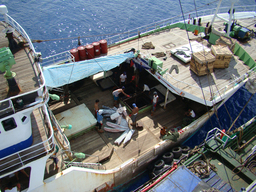
Transhipment (nighttime). Image credit: Juan Vilata

Transhipment at sea gives vessels operational options, including the opportunity to relocate items away from the scrutiny of port authorities. Hence, transhipment is often an integral part of maritime crime.[8] Simply put, transhipment involves offloading cargo from one vessel to another. This can be fish, but also provisions or any other cargo, including crew. It is far from uncommon, especially in remote high seas, where it is particularly difficult to oversee. Significant investment in monitoring, control and surveillance (MCS) is often necessary to ensure that unauthorised transhipment and other IUU fishing operations are identified.[9]

The complexity of MCS needs should not be underestimated. The capacity levels that are often required are exemplified by the recent collaborative programme between EFCA and the States of the Sub-Regional Fisheries Commission (SRFC), through which a surveillance operation was undertaken. This involved not only VMS monitoring, but also the satellite and radar equipment of the European Copernicus service, as well as coordinate information exchange efforts of the national authorities of the SRFC member States.[10] Unfortunately, these special cooperation programmes are usually time-limited, and in routine scenarios national capabilities can and often do fall short of the technical capacity needed to address all IUU fishing activity successfully. Around the globe, countries concerned about their maritime security and the activation of their blue economies have invested in advanced satellite fisheries intelligence programmes.[11] Although States in West Africa are working towards increasing their capacity to fully implement effective MCS systems, they have not yet achieved the kind of MCS capacity that would enable them to control IUU fishing activities comprehensively and effectively.[12]

A game of smoke and mirrors

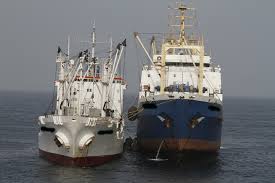
Although transhipment usually occurs between a fishing vessel and a refrigerated cargo vessel (often referred to as reefers), controls may be further complicated by the fact that other ships can also perform transhipment operations and other activities such as bunkering.[13] Of course, the non-compulsory nature of AIS, specially in waters where the presence of piracy and other violent crimes often justifies decisions to turn it off, means that effective monitoring via AIS alone can be very difficult. Nevertheless, erratic AIS readings can be indicative of activity that could form part of IUU operation patterns. For example, a vessel could disconnect AIS whilst moving toward safer waters where fishing vessels are known to be operating. It should be highlighted that such irregularities do not constitute evidence of wrongdoing per se, but they could be an indication of possible risk that an unauthorised transhipment is taking place. This is specially so in regions where IUU fishing transgressions involving transhipment are routinely documented.[14]

By way of example, recent research in the Indian Ocean has suggested that cases of unauthorised transhipment may be linked to bunkering activity. Though difficult to detect with conventional VMS and satellite automatic identification systems (AIS) controls, the researchers observed the presence of bunker vessels in the vicinity of fishing vessels and large factory trawlers, whose AIS signals suggested erratic behaviour, indicating the possibility of multiple re-supplying operations rather than fuelling.[15] Available AIS readings suggest that these scenarios are likely to be replicated in other regions, particularly in areas that continue to suffer from a high incidence of IUU fishing events, and where vessels able to perform bunkering as well as transhipment are present, such as West Africa.

Transhipment (daytime). Image credit: Juan Vilata

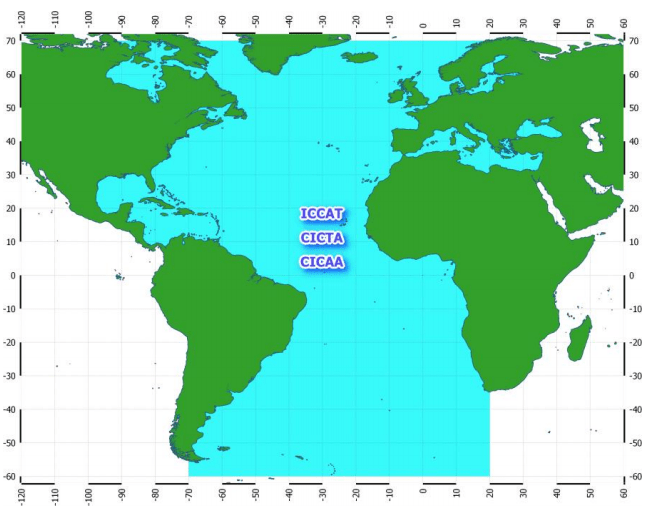
Recent research undertaken with satellite based AIS and satellite assisted radar in parts of the South East Atlantic managed by the Commission for the Conservation of Atlantic Tunas (ICCAT), comprising both the EEZ of Ascension Island and surrounding high seas areas, unveiled behaviour indicative of possible unauthorised fishing and transhipment and/or bunkering or supply, particularly around the EEZ borders, and especially by long liners.[16] Further, ICCAT records also indicate that transhipments are engaged into without adequate supervision, and that they may well be avoid inspection because fish and other cargo transfers are often impossible to differentiate from bunkering and supply operations.[17]

Further, as already stated, unauthorised transhipment is often an enabler to transnational maritime crime. Enquiry into the free online facility www.spyglass.fish reveals that drug trafficking offences have been documented in the West African region, both across the high seas and the EEZs of a number of States, all occurring alongside a very high volume of unauthorised fishing activity across the region. These overlaps, coupled with unusual or unexplained AIS readings, suggest an operational risk profile that warrants significant control and monitoring effort, as well as the adoption of surveillance mechanisms to safeguard compliance. 

The ICCAT management area. Image credit: ICCAT

Responsibilities of States with regard to transhipment

Under UNCLOS Part V, coastal States must ensure that fishing activities in their EEZ are appropriately managed (especially important are Articles 61 to 64 in this regard). As ITLOS highlighted in paragraph 113 of its Advisory Opinion, member States of the Sub-Regional Fisheries Commission must ensure that transhipments occur in specially designated harbours, amongst other requirements.

The responsibilities of flag States in the EEZ of coastal States were also discussed in detail by the ITLOS in its Advisory Opinion. In paragraph 114, ITLOS indicated that flag States must ensure compliance with the laws and regulations of the coastal States in which their vessels operate – this is of course not an optional matter or a courtesy: when it comes to fishing activities in the EEZs of coastal States, flag States have specific obligations under Articles 58.3 [“States shall have due regard to the rights and duties of the coastal State and shall comply with the laws and regulations adopted by the coastal State in accordance with the provisions of this Convention and other rules of international law (…)”] and 62.4 [“Nationals of other States fishing in the exclusive economic zone shall comply with the conservation measures and with the other terms and conditions established in the laws and regulations of the coastal State (…)”].[18]

Transhipment in West Africa. Image Credit: Richard White, Lindblad Expeditions

In addition, flag States have general obligations – see in particular UNCLOS Articles 94 concerning the exercise of effective jurisdiction and control over fishing vessels in the high seas, and Article 192 regarding the obligation to protect and preserve the marine environment in all ocean areas.[19] These responsibilities are refined and complemented by obligations established in other important international instruments.[20] Further, regional agreements frequently impose additional and often very specific duties. In the West African fishing grounds of the Atlantic the measures adopted by ICCAT should be complied with, so that the fishing and transhipment activities occurring in the area can be appropriately monitored.[21] Under ICCAT rules, only vessels that have been authorised to engage in transhipment can receive fishing products from fishing vessels lawfully operating in the regulated area.

Yet, ICCAT rules on the monitoring of transhipment is widely regarded as insufficient. In particular, whereas purse seiners carry 100% observer coverage when operating in the ICCAT area, long-liners are subjected to little scrutiny by comparison.[22] The ICCAT member States had an opportunity but failed to enhance their approach to monitoring in their latest (2019) meeting of the parties.[23] This has occurred against a backdrop in which historical VMS data is contributed to ICCAT by the relevant vessels’ flag States, but has been acknowledged as difficult to navigate and process in order to clarify compliance.[24]

Such voids in ensuring appropriate monitoring of transhipment, a high-risk operation for the purposes of IUU fishing and maritime crime, leaves significant opportunities for wrongdoing, particularly in an area where satellite MCS approaches are still in development and the EEZs of coastal states are vulnerable to unauthorised intrusion. This void in monitoring requirements also perpetuates a discrepancy in fishery conduct standards across different vessel types that is difficult to justify in an international decision-making forum with important management competences. Indeed, RFMOs such as ICCAT are key fora where States bring into effect their international obligation to cooperate in matters of conservation and management of transnational fish stocks. International cooperation is a responsibility that is not satisfied simply by ticking a box for attendance to meetings, but also requires a conduct that makes negotiation and ensuing decision-making meaningful.[25] Indeed, this is what to a great extent furnishes the regulatory output of RFMOs with an authoritative force, especially when it comes to considerations involving the characterisation of activities as IUU fishing, including the activities of non-members. Needless to say, this authoritative strength should not be undermined by maintaining necessary controls weak – least of all by the members themselves.

Mercedes Rosello July 2020  


[1] J Alder, and UR Sumaila, ‘Western Africa; A Fish Basket of Europe Past and Present’ (2004) 13(2) The Journal of Environment & Development 156-178, 160.

[2] D Belhabib, UR Sumaila, and P Le Billon, ‘The fisheries of Africa: Exploitation, policy, and maritime security trends’ (2019) 101 Marine Policy 80-92, 81.

[3] I Okafor-Yarwood, and D Belhabib, ‘The duplicity of the European Union Common Fisheries Policy in third countries: Evidence from the Gulf of Guinea’ (2020) 184 Ocean and Coastal Management 1-11, 2.

[4] D Belhabib et al, page 86. See also D Siebels, ‘Pirates, smugglers and corrupt officials – maritime security in East and West Africa’ (2020) 1(1) International Journal of Maritime Crime & Security 34-49.

[5] I Okafor-Yarwood, ‘The cyclical nature of maritime security threats: illegal, unreported, and unregulated fishing as a threat to human and national security in the Gulf of Guinea’ (2020) 13(2) African Security 116-146, 122.

[6] E De Coning, ‘Transnational Organized Crime in the Fishing Industry’ (UNODC, 2011).

[7] D Belhabib, P Le Billon, and DJ Wrathall, ‘Narco-Fish: Global fisheries and drug trafficking’ (2020) Fish and Fisheries, 1-16, 6.

[8] See I Chapsos, and S Hamilton, ‘Illegal fishing and fisheries crime as a transnational organized crime in Indonesia’ (2018) 22 Trends in Organized Crime 255-273.

[9] For more information on transhipment activities, see NA Miller et al, ‘Global Patterns of Transshipment Behavior’ (2018) Frontiers in Marine Science 240.

[10] See https://www.efca.europa.eu/en/content/pressroom/sub-regional-fisheries-commission-srfc-efca-and-france-fight-against-illegal.

[11] See for example http://www.verumar.com

[12] Comfahat-Atlafco, ‘Workshop on Monitoring, Control and Surveillance: and effective tool to fight against IUU fishing’ (2015) 4.

[13] See for example: https://www.marinetraffic.com/en/ais/details/ships/shipid:5260334/mmsi:538007413/imo:9766281/vessel:LAETITIA_V

[14] See https://wnwd.com/blog/something-smells-fishy/.

[15] JH Ford, B Bergseth, and C Wilcox, ‘Chasing the fish oil – Do bunker vessels hold the key to fisheries crime networks?’ (2018) Frontiers in Marine Science https://doi.org/10.3389/fmars.2018.00267.

[16] G Rowlands et al, ‘Satellite surveillance of fishing vessel activity in the Ascension Island

[17] ICCAT, Doc. No. COC-312/2019.

[18] ITLOS in Paragraph 111 of its Advisory Opinion refers broadly to ‘nationals’ rather than just vessels registered to the flag State [‘Advisory Opinion’].

[19] See Advisory Opinion from paragraphs 117 to 124, and 136.

[20] In particular, the UN Fish Stocks Agreement is a treaty of profound significance for the management of highly migratory and straddling species that occur partially in the EEZ.

[21] See http://www.fao.org/fishery/rfb/iccat/en#Org-Mission.

[22] See: https://iss-foundation.org/iccat-moves-to-protect-atlantic-bigeye-and-close-gaps-in-monitoring-and-data-collection/.  

[23] See https://www.globaltunaalliance.com/general/the-global-tuna-alliance-considers-the-outcomes-from-iccat-26th-november-2019/

[24] See M Ortiz, A Justel-Rubio, and A Parrilla, ‘Preliminary Analyses of the ICCAT VMS Data 2010-2011 to Identify Fishing Trip Behavior and Estimate Fishing Effort’ (2013) 69(1) Collect. Vol. Sci. Pap. ICCAT 462-481.

[25] M Hayashi, ‘The Management of Transboundary Fish Stocks under the LOS Convention’ (1993) 8(2) International Journal of Marine and Coastal Law 245-262, 252.

House of Ocean, home of The IUU Fishing Blog

Links between ghost gear and IUU fishing: a brief note on control opportunities in the ASEAN region

Abandoned, lost or discarded fishing gear (generally referred to as ‘ghost gear’) is a known stressor of marine species, a cause of ecosystem degradation, and a factor with significant economic cost to the fishing industry.[1] Ghost gear has been the focus of recent debate, attracting a considerable amount of attention in global policy fora.[2] In the ASEAN region, the removal of plastic litter has been made a priority by a number of States, with one of the most recent developments being the publication of Vietnam’s National Action Plan for Management of Marine Plastic Litter by 2030.

ASEAN Map

ASEAN region (Credit: Asean.org)

Vietnam has also stepped up efforts at regional cooperation for IUU fishing control.[3] Perhaps the country has been spurred by the yellow card raised by EU in 2017 over poor IUU fishing control practices,[4] or its more recent extension.[5] Vietnam might also have been stirred by a low ranking by the Global Initiative Against Transnational Organized Crime’s IUU Fishing Index.[6]

This move comes in the context of Vietnam’s double position of visibility in 2020, both as ASEAN chair, and as Standing Commissioner of the United Nations Security Council: one that no doubt will put pressure on the country to rise beyond the shadow cast by the EU’s yellow card on IUU fishing,[7] and another that should place it in an optimum position to promote cooperation policies that are congenial to its ambitious marine management objectives.

It is known that ghost gear and IUU fishing are two particularly challenging problems, even for countries that are committed to effecting sound ocean management. The links between ghost gear and IUU fishing are generally under-researched, but they have been a topic of increasing exploration in recent years. The Global Ghost Gear Initiative has suggested that a causal relationship is likely to exist: vessels fishing illegal may discard more gear in order to evade inspection or capture, or to hide illegal practices, and can lead to higher ghost gear impacts.[8]

Turtle in ghost gear - Ghost Nets Australia

Rescue work by Dhimurru Rangers (image credit: Jane Dermer). Ghost Nets Australia https://www.ghostnets.com.au/

In addition, a recent study by Richardson et al. involving ghost gear in Australia and Indonesian vessels operating in the region suggests that the loss of fishing gear may also be associated to related factors, including shortfalls in the governance of fishing grounds.[9] Amongst possible links, the author mentions poorly planned authorisation policies leading to undesirable interactions in overcrowded grounds resulting in gear conflict. 

Additional research is needed to confidently establish the causes of ghost gear loss and abandonment in more detail in different regions and fisheries, and to fully unwrap the relationship between IUU fishing and ghost gear. Nevertheless, it seems likely that improving controls over illicit and/or undesirable operating practices and conditions that result in gear attrition should pay off as an approach to more efficient management.

Global Ghost Gear Initiative Best Practice Framework

The Global Ghost Gear Initiative has published resource and guidance documents for the removal of ghost gear (https://www.ghostgear.org/resources)

Research suggests that initiatives should include a focus on preventative practices, such as gear maintenance, repair and management workshops and policies, as well as investment in safe disposal infrastructure and where possible financial support. Yet, this should be approached without losing sight to the need for sound authorisation and appropriate management to avoid overfishing and undesirable overlaps in busy fishing grounds to avoid gear conflict where possible.[10]

The removal of plastic litter from commercial fishing, including the collection of 100% of ghost gear, is an ambitious positive commitment under Vietnam’s Action Plan. Yet, like any other country involved in oceanic resource management, Vietnam would also do well to reinforce preventative fishery authorisation and grounds management efforts, as well as appropriate monitoring and enforcement as part of IUU fishing control strategies.

Lastly, the ability of derelict fishing gear to cross borders as a result of marine currents implies that management strategies should involve regional cooperation where possible.[11] Given recent commitments made by ASEAN and their chair State this year,[12] 2020 looks set to be auspicious for ocean policy, but -as always- any benefits will be dependent on real political will and the determination to ensure commitments come to fruition through adequate and sustained implementation.

Mercedes Rosello, March 2020

References

[1] APEC, Derelict Fishing Gear and Related Marine Debris: An Education Outreach Seminar Among APEC Partners (2004) [http://www.wpcouncil.org/documents/APECSeminar/Other%20Documents/Seminar%20Report.pdf].

[2] https://oceanconservancy.org/blog/2019/11/06/dispatches-ghost-gear-ocean-2019/

[3] https://theaseanpost.com/article/vietnam-joins-asean-effort-combat-iuu-fishing

[4] https://ec.europa.eu/commission/presscorner/detail/en/IP_17_4064

[5] https://e.vnexpress.net/news/news/vietnam-to-investigate-illegal-fishing-as-eu-yellow-card-remains-3942030.html

[6] https://globalinitiative.net/iuu-fishing-index/

[7] https://iegpolicy.agribusinessintelligence.informa.com/PL222714/Vietnam-plans-to-address-IUU-fishing-loopholes

[8] https://www.ghostgear.org/news/2017/5/31/iuu-and-ghost-gear-what-are-the-links

[9] K Richardson et al, Understanding causes of gear loss provides a sound basis for fisheries management (2018) 96 Marine Policy 278-284, 280.

[10] Richardson et al, p. 281.

[11] Richardson et al, p. 278.

[12] https://stopillegalfishing.com/news-articles/asean-network-for-combatting-iuu-fishing-established/